Fact-checked 22 July 2026. Historical details were checked against UNESCO, the Sicilian Region and the official regional tourism portal. ZTL information follows the City of Syracuse order effective from 1 April 2026; signs, temporary orders and current municipal information always take precedence on the day.
Syracuse is not only Ortigia—and Ortigia is not only Piazza Duomo
The first thing to understand is that Syracuse’s principal experiences occupy two different landscapes. Neapolis on the mainland contains the Greek theatre, stone quarries, Roman amphitheatre and traces of the ancient metropolis. Ortigia is the low, dense island where the Temple of Apollo, market, cathedral, Arethusa spring, medieval lanes and Baroque palaces are woven into a living district. Between them are modern Syracuse, the railway station, museums and streets seldom shown on postcards but essential to the city’s continuity.
With only one day, do not try to “do” every monument. Begin at Neapolis while temperatures are lower, eat or rest around midday, and enter Ortigia later. With two days, the city improves dramatically: one for antiquity and museums, one for Ortigia’s layers and the sea. From Giarre, Syracuse is a substantial but realistic outing in the longest band of the day trips from Giarre guide. By train, it also fits naturally into a car-free Sicily journey.
The UNESCO property includes Syracuse and the rocky necropolis of Pantalica, roughly 40 kilometres away. They form one World Heritage site, but not a sensible combination on an ordinary day. This guide covers Syracuse and Ortigia; Pantalica needs its own transport, footwear, water and weather plan.
From Corinthian colony to Baroque city: history visible in the walls
Greek settlers from Corinth founded Syracuse in the late eighth century BCE, traditionally dated to 734 or 733 BCE. Ortigia was the starting point, its natural harbours and freshwater source making it strategic. The city later expanded into several mainland quarters and became one of the Greek world’s most powerful city-states. It competed with other Mediterranean powers, defeated an Athenian expedition in the fifth century BCE, and became associated with figures including Archimedes.
Rome captured Syracuse in 212 BCE. Under Roman control it remained important, although its role and monuments changed. Byzantine, Arab-Muslim, Norman, Hohenstaufen, Aragonese and Bourbon rule followed. Each period reused or built over what existed. The Temple of Apollo served at different times in religious and secular functions, including church and mosque. Doric columns from the Temple of Athena still stand inside the cathedral walls. Castello Maniace at Ortigia’s point was built under Emperor Frederick II in the thirteenth century.
The 1693 earthquake devastated south-eastern Sicily and prompted Ortigia’s striking Baroque transformation. The cathedral façade is Baroque while its body literally contains a Greek temple. This physical integration makes Syracuse more than a sequence of eras. UNESCO calls Syracuse and Pantalica exceptional testimony to Mediterranean cultures over three millennia. On Piazza Duomo, that abstract phrase becomes tangible: Doric column, Christian interior and Baroque front belong to the same structure.
Neapolis in the morning: a city cut from rock
Neapolis is not on Ortigia and should not be saved for the hottest hour. The terrain is open, uneven and only partly shaded. Wear closed footwear with grip, carry water and sun protection, and check the current opening and access on the official Neapolis Archaeological Park page. Performances, maintenance and season can alter how closely individual elements may be approached.
The Greek theatre is a working space, not a perfect ruin
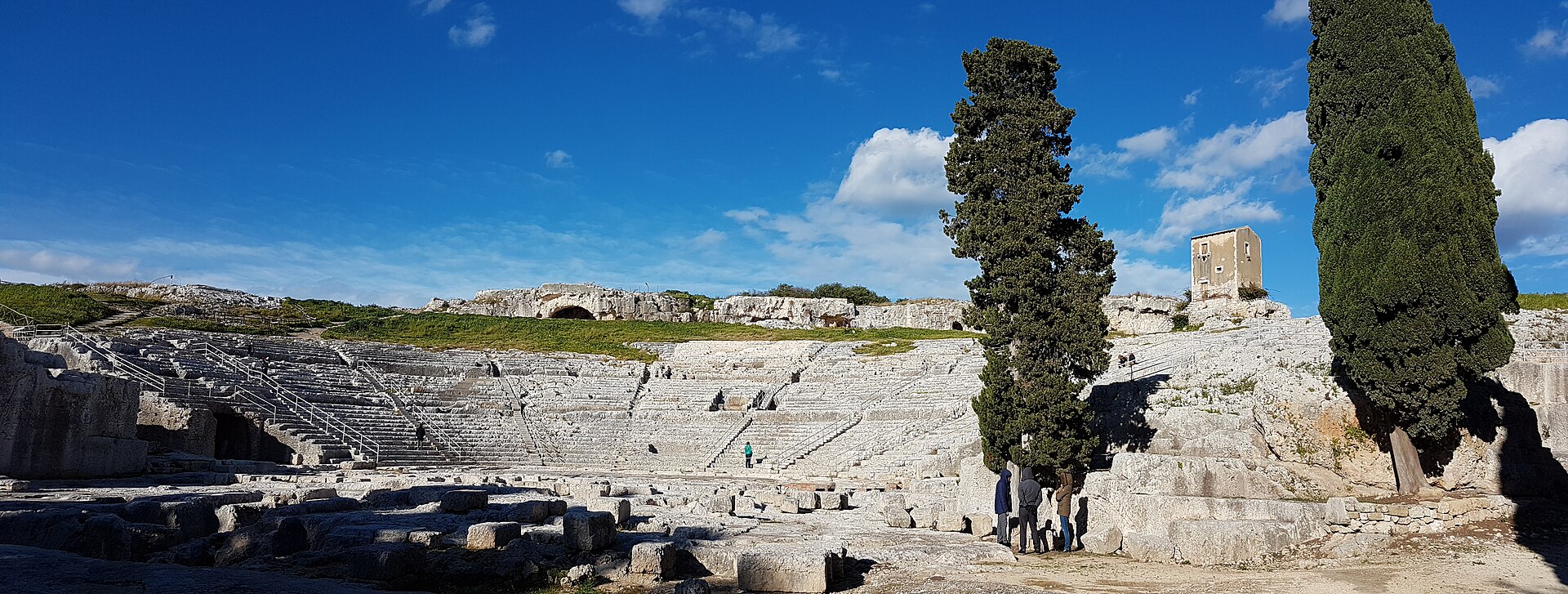
The cavea is cut into the rock, and the complex developed through multiple phases. It accommodated drama and public gatherings, and was later altered under Roman influence. In the modern performance season it again becomes a stage for classical plays. Seating protection, structures and technical equipment may therefore change the view. Visitors expecting an untouched ruin can be disappointed; others understand reuse as a continuation of purpose. Move slowly enough to see the relationship among rock, seats and landscape rather than taking only the widest photograph.
The quarries and Ear of Dionysius: extraction, captivity and acoustic legend
The latomie were stone quarries supplying limestone for the city. Excavation created deep and extraordinary voids that later acquired vegetation and became associated with prisoners, including after Athens’ disastrous Sicilian expedition. The artificial cave called the Ear of Dionysius has a dramatic form and acoustic effect. Its name and story of a tyrant listening to prisoners’ whispers belong to later tradition and should be treated as narrative, not documented surveillance technology.
It remains important because it shows Syracuse repeatedly turning geology into city: rock became building material, prison landscape, garden and visitor icon. Allow your eyes to adjust and follow access rules. Loud shouting to test the echo is unnecessary and inconsiderate when the cave is busy.
The Roman amphitheatre and Hieron’s altar change the scale
The Roman amphitheatre is a different civic space from the Greek theatre, associated with Roman spectacle and partly cut into rock. The great altar traditionally linked with Hieron II indicates the monumental scale of Hellenistic Syracuse, even though much of its superstructure has vanished. Do not look only for intact forms. Absence is instructive: stone was reused over centuries, and the later city continued to build itself from the ancient one.
Between Neapolis and Ortigia: lunch, museum or an intentional pause
After two or three hours in the park, most people need shade. The Paolo Orsi Archaeological Museum is on the mainland and contains material that gives the ruins context, but it asks for time and concentration. On a one-day visit, choose the museum instead of something else rather than adding it to everything. The San Giovanni catacombs and church offer another direction, subject to opening and interest.
A long lunch is not wasted time. Syracuse’s summer light and heat make a pause a practical tool. Avoid spending midday in an outdoor queue and preserve Ortigia’s streets for later, when façades hold deeper shadow. If driving, leave the car legally parked on the mainland; do not move it onto Ortigia merely to save a few steps.
Ortigia in an order that follows its history and light
Ortigia is small enough to walk and dense enough to reward detours. A useful route begins at the bridges, passes the Temple of Apollo and market, threads side streets to Piazza Duomo, then reaches Arethusa spring and the water before continuing south or returning along the western shore. Castello Maniace has separate opening conditions and cannot be assumed accessible because you have reached its gate.
The Temple of Apollo concentrates the city’s long reuse
The remains stand in the open near the island’s entrance. The temple is considered among the earliest monumental Doric stone temples in Sicily and the western Greek world. Later functions and buildings incorporated it, explaining its fragmentary form. See it before Ortigia’s Baroque dominates your eye; the contrast between weighty Archaic Doric and later curved façades then becomes clearer.
The market is best understood as a market, not merely a lunch backdrop
Ortigia’s market near the bridges is generally most active in the morning, when fish, produce, cheese, spices and calls fill narrow streets. Arrive late and restaurants and delicatessens remain, but much of the working rhythm has gone. The regional tourism authority’s official Syracuse guide highlights the market as an Ortigia landmark. Do not block transactions, ask before taking close portraits, and resist the idea that every expensive sandwich is an essential local ritual.
Piazza Duomo must be read as both space and stratification
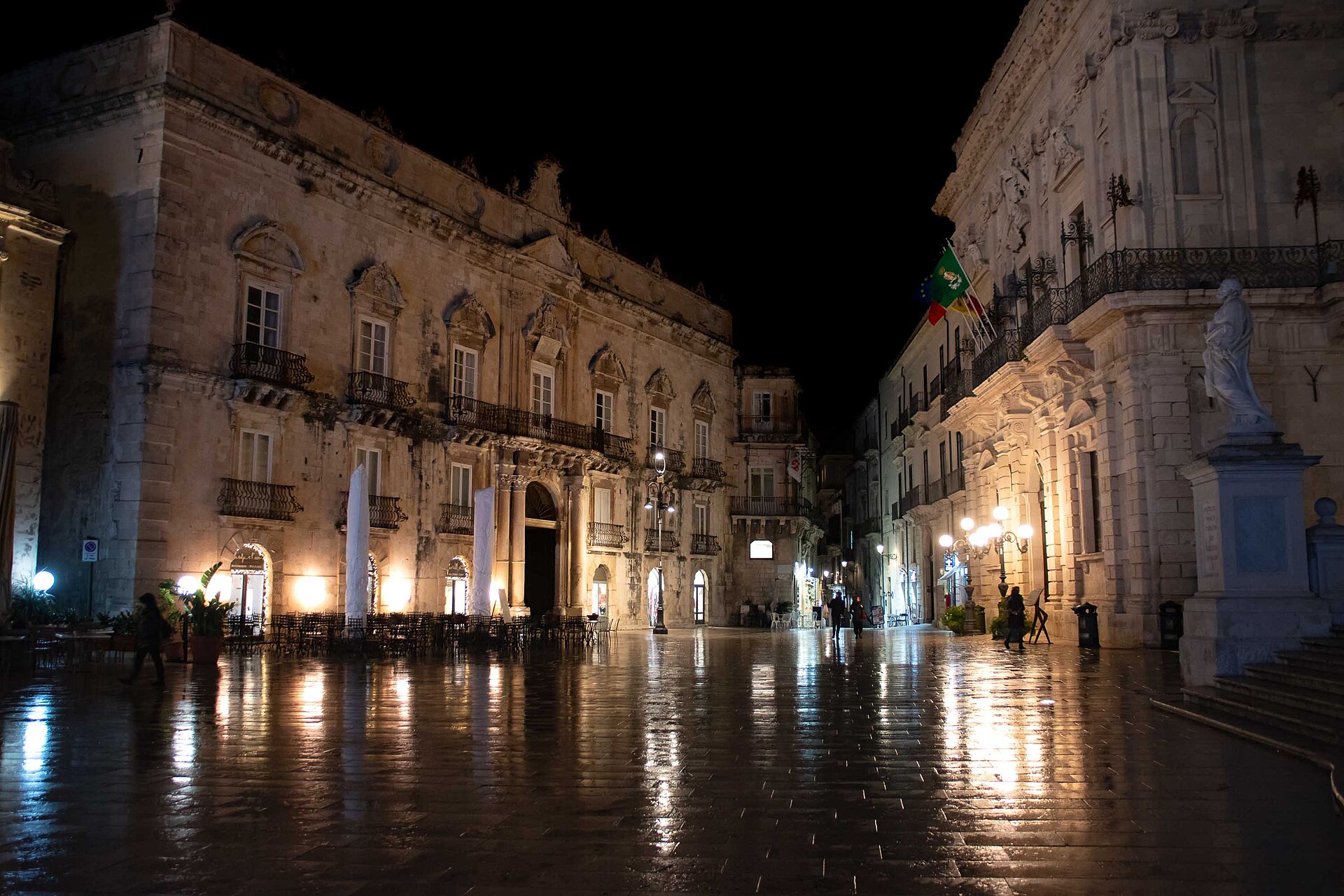
The pale, gently curving square is Ortigia’s ceremonial centre. Its cathedral incorporates the Temple of Athena, erected after Gelon’s victory over Carthage in 480 BCE; Doric columns remain visible in the walls. Christian, Norman and Baroque phases altered the building without erasing its antique body. Santa Lucia alla Badia and surrounding palaces make the square seem unified, although it is a product of catastrophe and reconstruction.
Respect the church as a place of worship: dress reasonably, keep voices low and let services take priority. Two short visits can be stronger than one long one—first in hard daylight, when the stone almost dazzles, and again in early evening when residents and visitors share the space.
Arethusa spring joins myth, freshwater and sea
Fonte Aretusa lies beside the sea as a freshwater spring containing papyrus. Greek myth tells of the nymph Arethusa fleeing beneath the sea and emerging here, connected with the river god Alpheios. The myth is not a hydrological account; it shows how ancient people gave Ortigia’s unusual freshwater a story. Continue along Lungomare Alfeo, where sunset can be beautiful, without assuming the most visible waterfront restaurant is the best.
Maniace and the point: Ortigia as fortress
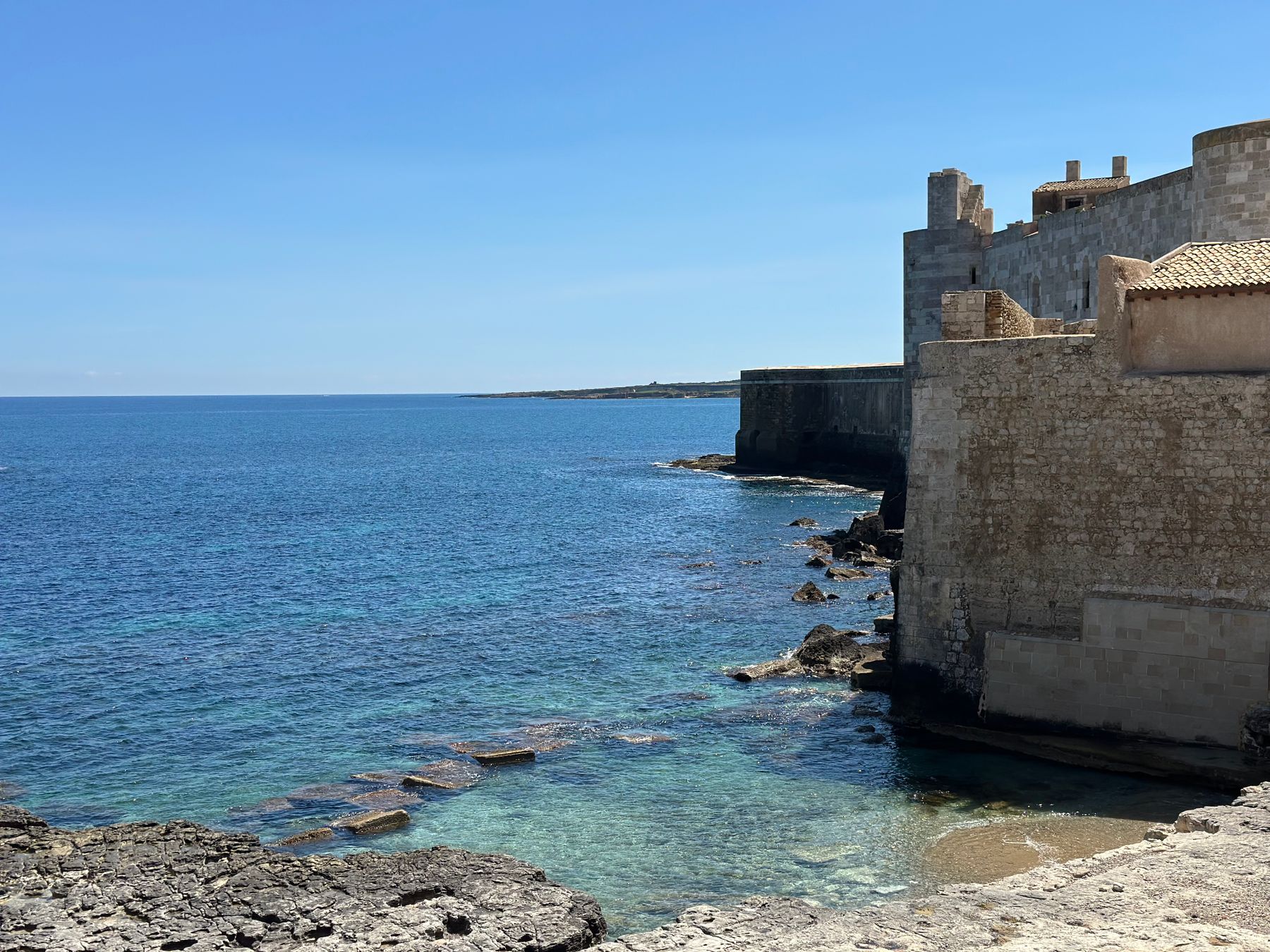
Castello Maniace was built for Frederick II between 1232 and 1240, controlling the harbour approach from the island’s far end. Its mass supplies a different Ortigia from the Baroque city: military, maritime and oriented towards routes of power. Check official opening before walking if entry matters to you. The quieter southern streets are worthwhile even when the castle is closed, but barriers and military areas must be respected.
The ZTL and parking in 2026: the practical decision that can save the day
Ortigia has a camera-controlled zona a traffico limitato, or ZTL. The City of Syracuse’s order no. 189/2026 set the following periods from 1 April 2026: Monday to Saturday, 11:00–15:30 and 17:00–02:00; Sundays and public holidays, 10:00–02:00. That is the fact-checked position, not an invitation to enter outside those hours. Pedestrian streets, local controls, signs and later changes can still prohibit access.
The robust default is Molo Sant’Antonio on the mainland or another official car park outside Ortigia’s restricted traffic zone; walk across the bridge from there. Talete is on Ortigia itself and should be used only when current signs and a legal access route clearly permit it. Confirm access, capacity and charges that day. Follow road signs instead of an app that may route you through a ZTL gate. If your accommodation is on Ortigia, ask the host in advance whether a plate can be registered, where luggage may be unloaded and where the car must then remain. A hotel booking does not automatically cancel a fine.
By rail, you arrive at Syracuse station on the mainland. The walk to the start of Ortigia is manageable, though a taxi can make sense with luggage, limited mobility or midday heat. The station-to-Neapolis and station-to-Ortigia directions differ; plan the sequence rather than walking back and forth.
Food and rhythm: eat where the hour makes sense
Syracuse sits between sea, agriculture and south-eastern culinary traditions. Look for fish according to the day’s catch, pasta with local produce, aubergine, almond, citrus and granita, but judge a restaurant by focus and activity rather than the number of “typical Sicilian” signs. Market lanes contain strong lunch choices and high-throughput tourist businesses alike. Two streets away, the pace may be calmer.
An aperitivo on the western waterfront and dinner in a side lane can create better balance than taking both meals on the same view-facing row. Reserve if a particular restaurant matters in high season. Expensive cocktails on an empty stomach after hot hours at Neapolis are not an investment in the evening; water and a genuine pause are.
Syracuse through the seasons
Spring brings comfortable Neapolis temperatures and flowering landscapes, though Easter and the classical theatre season can increase demand. Summer requires a divided day: antiquity early, shade at midday and Ortigia later. Bring a physical hat, not only sunscreen; limestone reflects light. September and October can combine warm sea with milder walking, with a greater chance of showers. Winter restores quiet to the squares and a more local Ortigia, but some attractions shorten hours and sea winds feel raw.
Swimming from urban access points depends on weather, waves and local conditions. Ortigia is not a classic beach resort. If a proper beach day matters, plan it separately at somewhere such as Arenella or Fontane Bianche with current transport—or compare the options in the Catania and Taormina beaches guide.
The less obvious Syracuse: an island that still has to work on Monday morning
Ortigia has become highly desirable and gained holiday rentals, restaurants and design shops. It remains more than scenery. Residents must buy food, receive deliveries, attend church, walk dogs and navigate the same narrow streets. The way to notice this is to leave the shortest route between market and cathedral: wander Giudecca’s lanes, take the eastern waterfront in morning light, and pass small squares where laundry and scooters outnumber souvenirs.
The mainland also deserves attention. Paolo Orsi Museum and Neapolis demonstrate that ancient Syracuse was vastly larger than Ortigia. The modern city reminds us that World Heritage does not freeze a place. UNESCO itself stresses the need to reconcile conservation with a living, evolving urban landscape. That changes the visitor’s eye: a worn façade or busy road is not a failure of authenticity, but evidence of continuity.
One day, two days or three: a realistic division
With one day: enter Neapolis near opening, take a simple lunch and pause, then see the Temple of Apollo, Piazza Duomo, Arethusa and an evening waterfront. Omit the museum and Pantalica. With two: reserve the first for Neapolis, Paolo Orsi or the catacombs and a slow evening; give the second to the market, Ortigia, cathedral, Maniace if open and long side-street walks. With three: add one separate outing to Noto, a beach or—with serious planning—Pantalica, not all three.
Driving from Giarre, leave early and park once. Coming by rail, check the last return before allowing the evening to expand. Staying overnight, choose between Ortigia’s atmosphere and the mainland’s simpler logistics. Consult eastern versus western Sicily if Syracuse will decide how to divide your island nights.
Conclusion: experience the layers in an order your body can sustain
Syracuse’s magnitude is not one icon but the relationship among rock, harbour, temple, church, fortress and living street. Neapolis reveals the ancient city’s scale. Ortigia reveals how later societies reused and transformed it. The cathedral contains the entire argument in one building.
Start early on the mainland, protect the middle of the day, park beyond the ZTL and give Ortigia late light. Verify official openings and municipal traffic rules near your visit. At that rhythm, Syracuse stops being an exhausting catalogue of ruins and façades and becomes a city in which three millennia can genuinely be read while walking.