Fact-checked 22 July 2026. World Heritage and destination details were checked against UNESCO and Visit Sicily. Transport, nature access and seasonal operations change; consult official timetables, park notices and airport links close to travel.
The short answer: choose east for volcano and close contrasts, west for Palermo and the open coast
Choose eastern Sicily if Etna matters, if you want to combine Taormina, Catania and Syracuse, or if many sharply different day trips from one base appeal. Choose western Sicily if Palermo is the journey’s centre of gravity, if you dream of the dramatic coast between Scopello and San Vito Lo Capo, or if Arab-Norman architecture, salt landscapes and western archaeological parks pull most strongly. Neither side is “more authentic”. They simply organise time differently.
With seven nights, you should generally choose one side. With ten, you can explore one deeply or combine two strong cross-island bases while omitting the edges. Only at roughly fourteen nights does an east–west journey become comfortable without daily compromise. Sicily is the Mediterranean’s largest island, and a motorway on a map does not reveal mountain roads, engineering work, city traffic, parking and the mental cost of changing accommodation.
This is not a contest in which one half wins by counting attractions. It is a decision guide about landscape, rhythm and logistics. If your main question is the base, read where to stay in Sicily. If you already know that you will not drive, Sicily without a car changes the weighting substantially.
Where is the boundary, exactly?
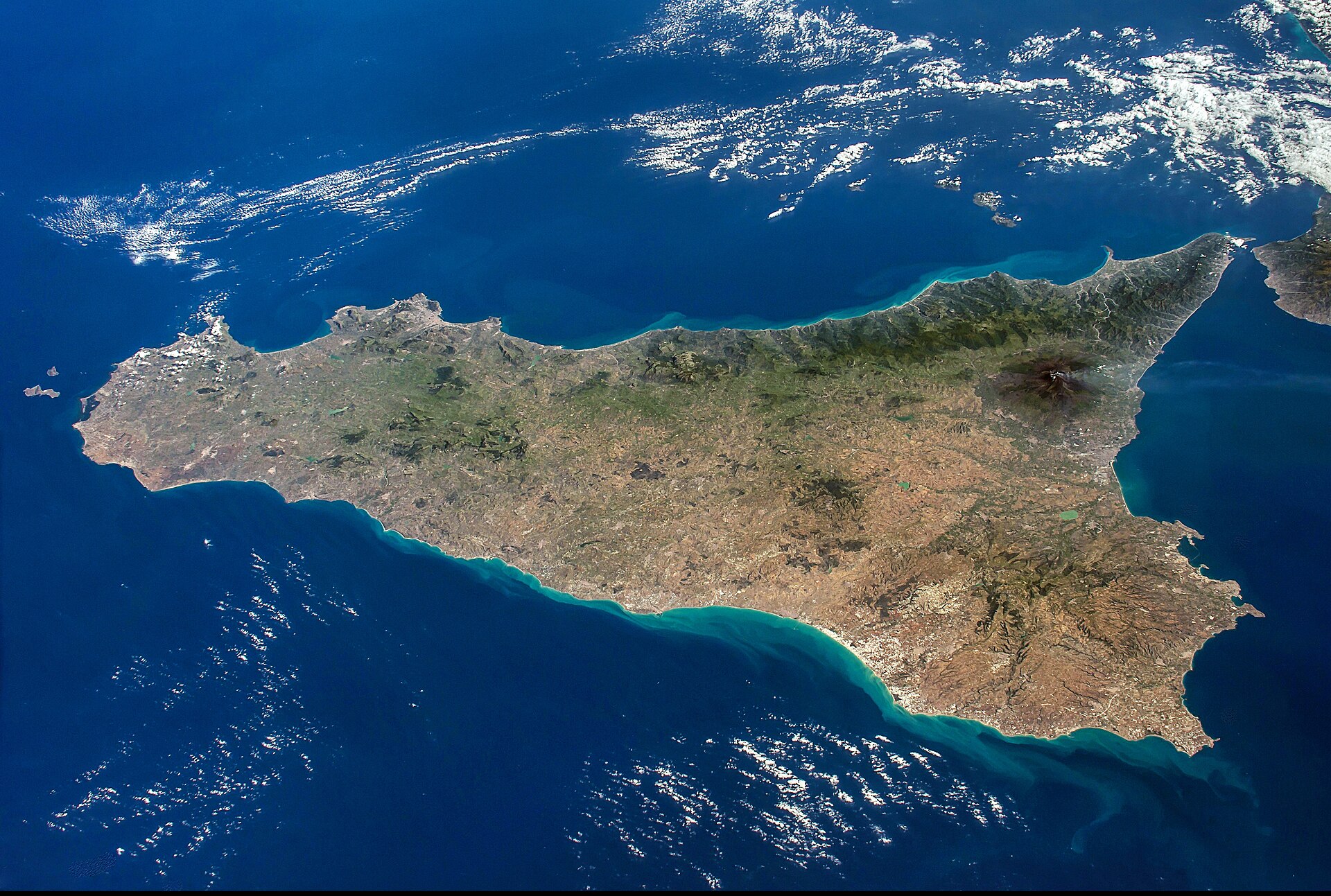
“East” and “west” are planning ideas, not exact historical regions. Here, east means roughly the Ionian axis from Messina through Taormina, Giarre and Catania to Syracuse, together with Etna’s slopes and the Val di Noto. West means Palermo, Cefalù and the Madonie to the north, plus Trapani province with Erice, the Aegadian Islands, salt pans, Segesta, Selinunte, Scopello and San Vito Lo Capo. Agrigento is on the south coast and can join a western tour, but it is not a casual outing from Palermo or Trapani.
Cefalù shows that the division is porous. It lies east of Palermo but often belongs logistically to a western holiday. Ragusa and Modica lie farther south than “east”, yet connect naturally with Syracuse and Catania through Baroque history and airport. The Aeolian Islands are typically approached via Messina or Milazzo and fit an eastern sequence; the Aegadian Islands off Trapani belong practically to the west.
Do not draw a vertical line through the island. Draw circles around possible bases and see what can be reached without making every day long. Giarre covers much of the Ionian coast and Etna’s eastern side. Palermo covers a vast city, Monreale and Cefalù. Trapani covers Erice, salt country and the Aegadians. A good trip often consists of two circles rather than a zigzag.
History gives the two sides a different weight
East: Greek cities, earthquake, Baroque and a living volcano
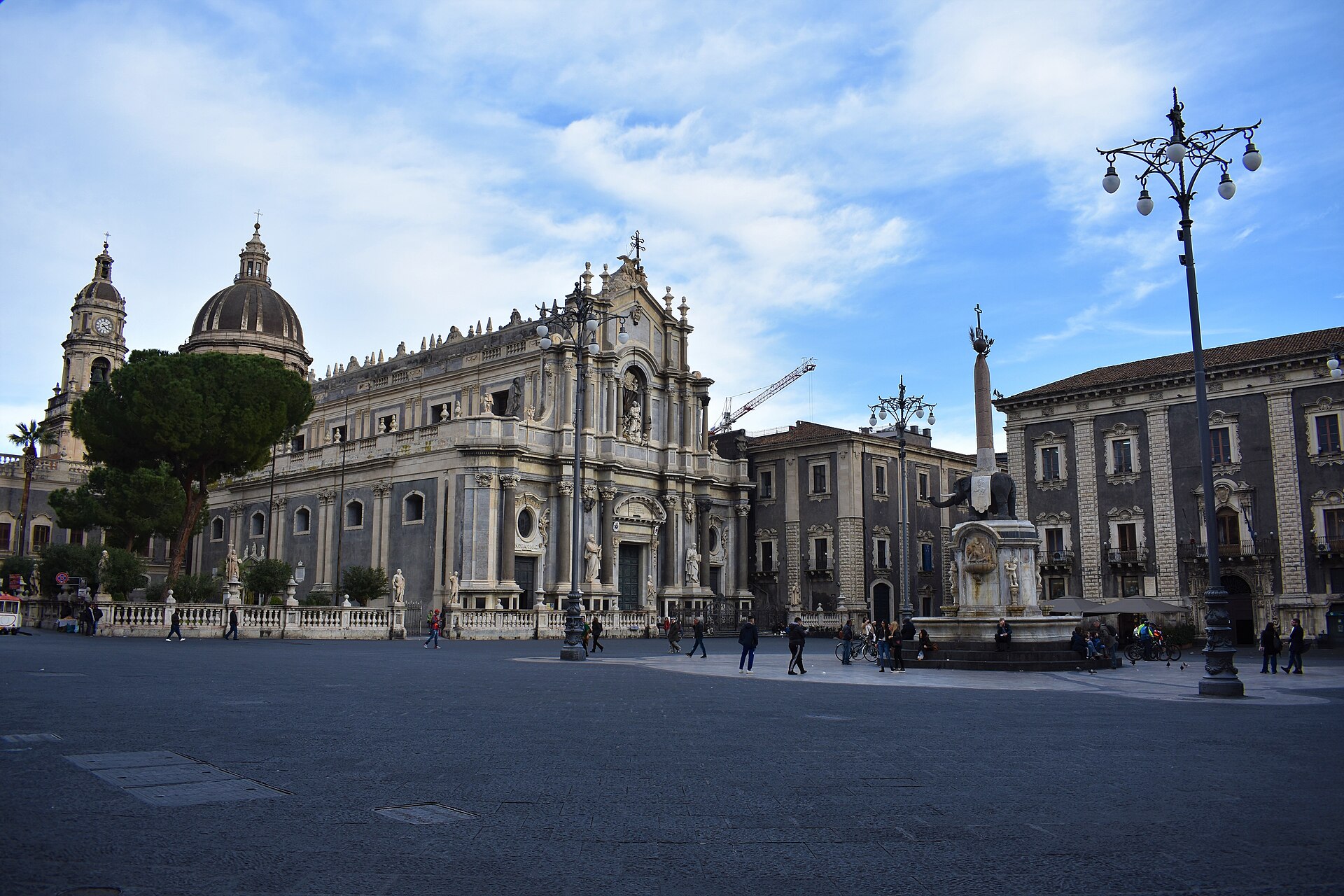
Eastern Sicily’s central story is not Etna alone, but the encounter among volcano, ancient cities and reconstruction. Greek colonies such as Naxos, Catania and Syracuse faced the Ionian Sea. Syracuse became a power in the Greek world, and UNESCO now links the city with Pantalica’s rocky necropolis as testimony to Mediterranean civilisation over three millennia.
Disaster remains visible in urban form. Etna’s 1669 eruption struck Catania, and the 1693 earthquake destroyed or damaged much of the south-east. Reconstruction produced the Baroque urban spaces of Catania, Noto, Ragusa, Modica, Scicli and other towns. UNESCO’s Late Baroque Towns of the Val di Noto comprise parts of eight towns rebuilt on or beside earlier settlements after the earthquake. Shared origin gives them kinship, not uniformity: Noto is planned and golden, Ragusa dramatically divided by terrain, Catania black-and-white and metropolitan.
Etna brings history into the present. Volcanic activity affects agriculture, construction, roads, views and everyday preparedness. UNESCO’s Etna property contains 19,237 uninhabited hectares in the highest and most strictly protected section and recognises an exceptionally long documented eruptive record. An eastern holiday can therefore move from a Greek theatre to a recent lava flow without the subjects feeling disconnected.
West: Phoenician links, Islamic inheritance, Norman synthesis and maritime trade
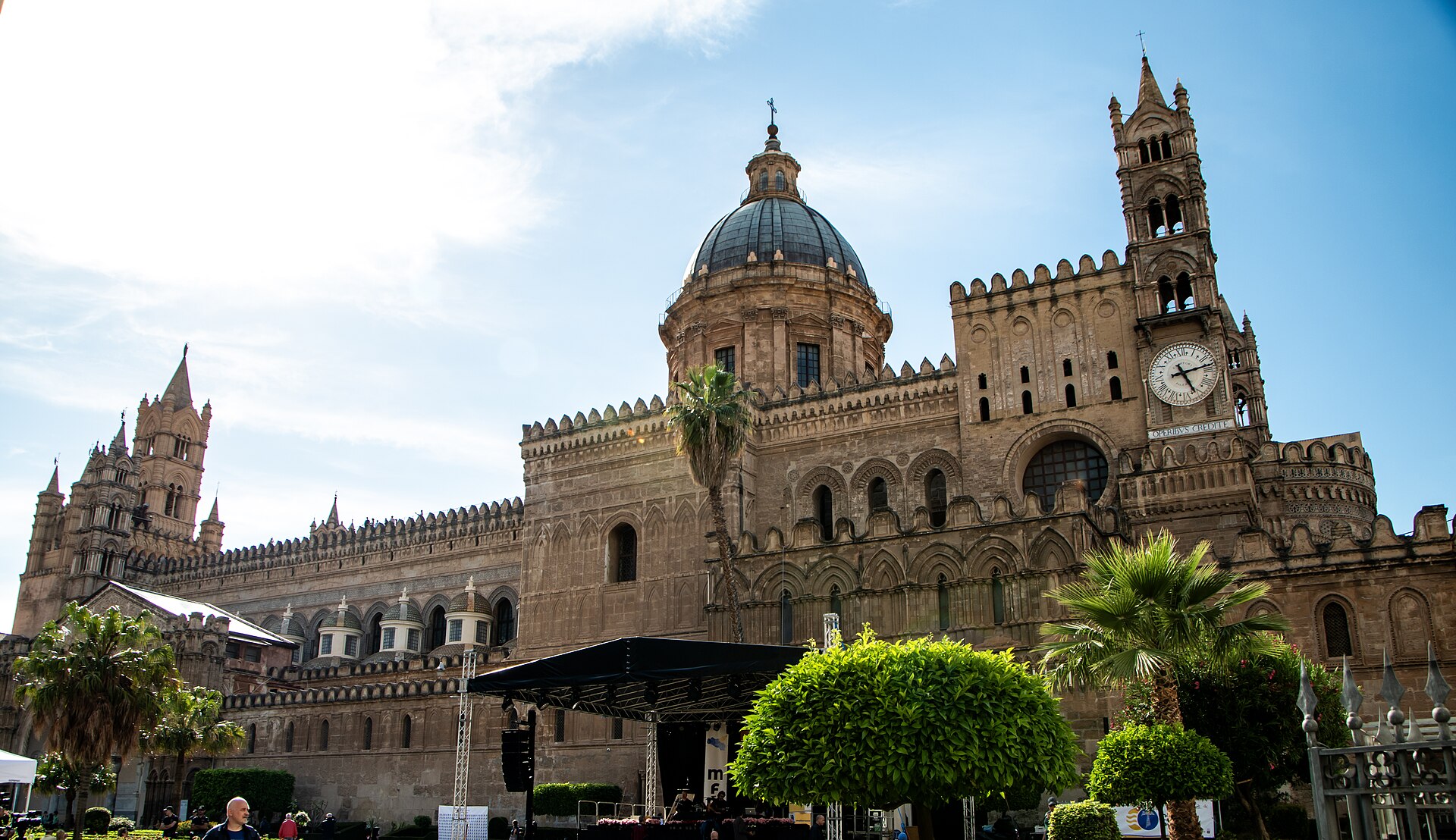
Western Sicily faces North Africa, Sardinia and the western Mediterranean. Phoenician and Punic networks left traces at Mozia and elsewhere along the western coast. Palermo later became a major centre of Islamic Sicily and then capital of the Norman kingdom. The important story is not a simple succession of conquerors, but cultural combination.
UNESCO’s Arab-Norman Palermo and the cathedrals of Cefalù and Monreale consist of nine civic and religious monuments from the Norman kingdom of 1130–1194. UNESCO emphasises their synthesis of Western, Islamic and Byzantine traditions. The Palatine Chapel mosaics, San Cataldo domes, Zisa’s palatial logic and Monreale’s immense image world are not a vague “east meets west” cliché; they are material results of a complex court and society.
Farther towards Trapani, sea, salt and fortified heights dominate. Segesta sits inland with a Doric temple and theatre; Selinunte spreads on a vast scale near the south-west coast. Visit Sicily’s official Segesta to Selinunte itinerary indicates how much archaeology exists outside Palermo. The west is not merely beach. It distributes its metropolis, open country and monuments in a different pattern.
Landscape: Etna’s vertical world against the western horizon
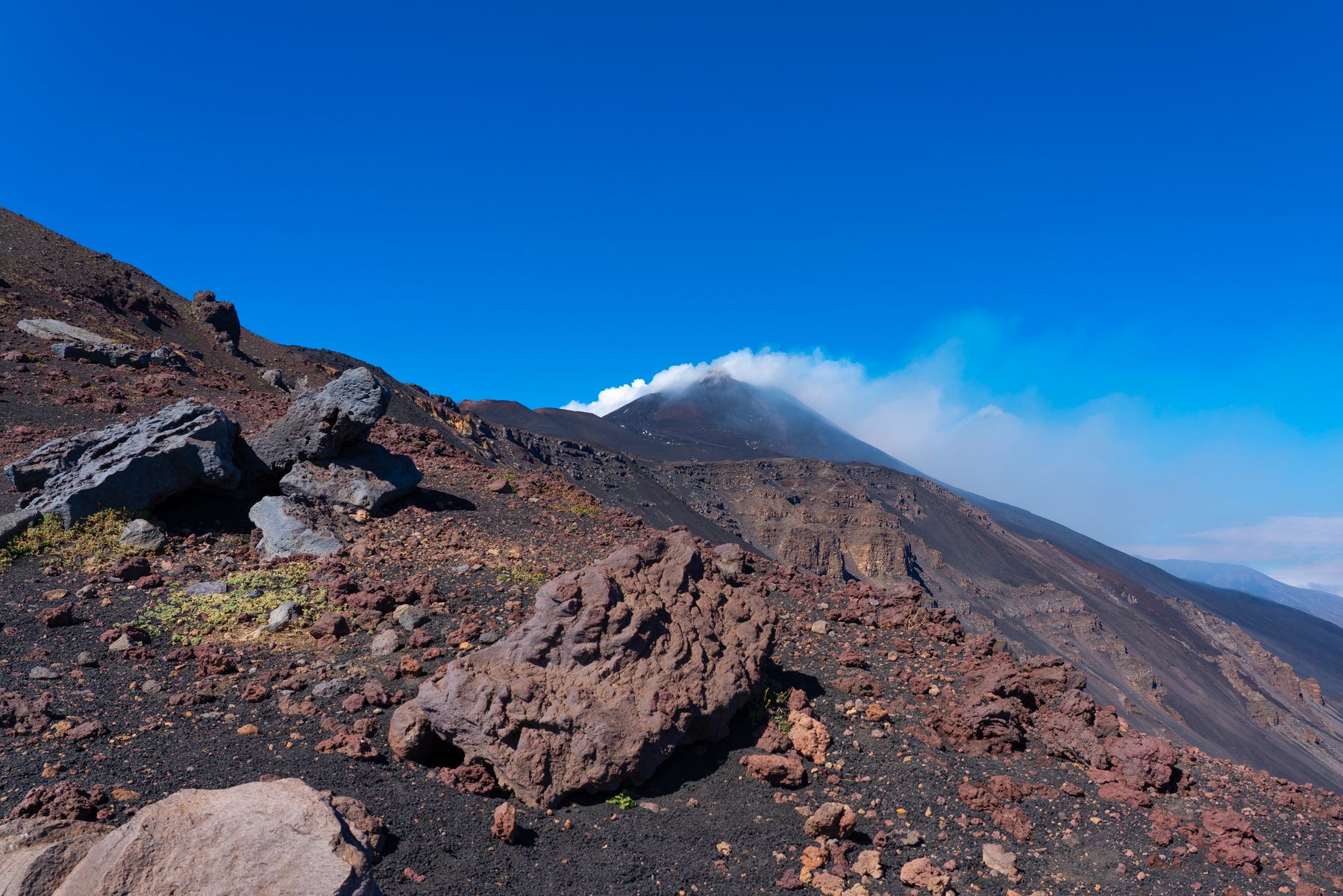
Eastern Sicily often feels vertical. Within a short distance, the road rises from sea through citrus and vines to woods, lava and high mountain. Etna dominates views, yet often hides in cloud and creates microclimates. The Ionian coast is steep, stony or lava-shaped in many places, with settlements compressed between mountain and water. Sand beaches exist, but not automatically beneath the most celebrated towns.
The west feels more horizontal and exposed to wind. Around Trapani are salt basins, low islands and large sunsets. The north-west coast rises dramatically at Monte Cofano and Zingaro, but the view is towards sea and limestone rather than a single dominant summit. Zingaro has no through coast road; Visit Sicily describes a roughly seven-kilometre coastal trail between the Scopello and San Vito sides, passing small coves. The absence of road is the conservation value and also a logistical constraint.
If you want cool higher walks, volcanic geology and dramatic elevation change, east has a clear advantage. If you want to move among viewpoints, salt water, limestone coves and low islands, west has the stronger unified coast. Weather still chooses the day: wind can spoil a western boat plan just as cloud and volcanic conditions can close an eastern Etna plan.
Cities: Catania’s energy and Syracuse’s layers versus Palermo’s abundance
Palermo is the most demanding and rewarding single city in this comparison. It can hold four or five days of markets, churches, palaces, street culture, museums and neighbourhoods, and should not be reduced to an afternoon. Its beauty is uneven: an extravagant interior may stand beside a trafficked, weathered street. If city life is the primary subject of the trip, the west wins.
Catania is less monumental in total scale but intense and practical as a base. The Pescheria, lava stone, university life and Etna’s presence give it a rough coherence. Taormina is more polished and expensive, while Syracuse offers the clearest relationship between antiquity and Baroque. The Syracuse and Ortigia guide explains why Neapolis and the island deserve separate attention.
Smaller towns differ too. East has wine and lava settlements such as Milo, Zafferana, Linguaglossa and Randazzo, plus the Baroque towns of the south-east. West has Erice high over Trapani, fishing and port towns, Madonie villages and smaller centres shaped by wine and salt. If you prefer one metropolis followed by nature, Palermo plus Trapani province works well. If you want to alternate medium-sized towns and landscapes almost daily, east is easier.
Beaches: west has the strongest reputation, east the best mix from one base
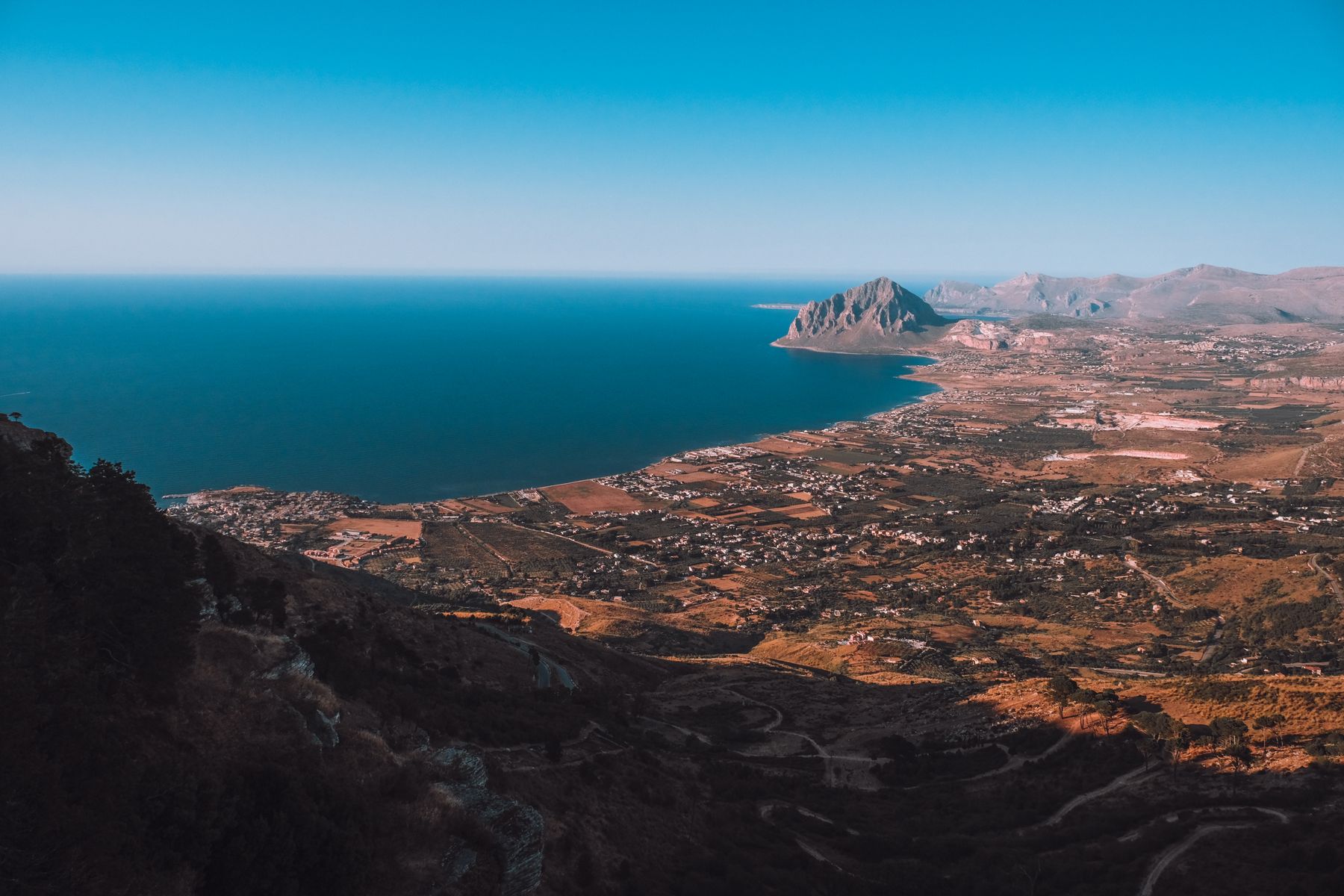
Western Sicily contains some of the island’s most heavily promoted swimming places: San Vito Lo Capo’s pale sand, Zingaro’s coves, Scopello, Favignana and the Castellammare coast. Beauty brings pressure in July and August. Parking, access to small coves, ferry tickets and reserve rules belong in the plan. A “secret” beach is seldom secret in peak season.
The eastern coast is more varied. Isola Bella below Taormina is dramatic, small and busy. Giardini Naxos and Letojanni combine town and bathing. Fondachello and Marina di Cottone offer longer, more ordinary shore. Aci Trezza and Aci Castello mean lava rock and deeper water rather than sand. Farther south are sandy stretches around Fontane Bianche and Vendicari.
Choose west if a classic beach and turquoise cove should be the holiday’s daily main image. Choose east if swimming belongs among Etna, city and archaeology. The beaches near Catania and Taormina guide shows why shore type matters. Both sides need plans for wind, waves and high-season pressure; water colour in a photograph reveals nothing about today’s conditions.
Food: one island, different connections
In the east, Etna and south-eastern agriculture are conspicuous: citrus, pistachio country, almond, cherry, honey, wine from volcanic soils, granita, and dishes associated with Catania and Syracuse. “Bronte pistachio” should not be used as a generic label for everything green; origins and quality differ. On the coast, swordfish, small fish and shellfish meet vegetables and pasta, while Modica in the south-east holds its distinct chocolate tradition.
In the west, North African connections become especially visible in Trapani’s fish couscous, spices and port cooking. Marsala wine, salt, tuna traditions, busiate pasta, almonds and Belice produce form another regional profile. Palermo has an enormous street-food repertoire, but its markets are not snack theme parks; they remain commerce, neighbourhood and everyday economy.
The difference is not that east is “Italian” and west “Arab”. Both sides contain many layers. Choose by curiosity: wineries on an active volcano and granita in the east; couscous, salt and Palermo market culture in the west. On either side, a focused kitchen using seasonal produce is stronger evidence of place than a menu containing 70 Sicilian icons.
Transport and airports: the decision may become simple here
Catania Fontanarossa is the natural eastern gateway. Catania, Giarre, the Taormina area and Syracuse are logical onward destinations, even where a connection requires a change. Palermo Falcone Borsellino suits the capital and north-west; Trapani airport can be useful for Trapani province but has fewer routes and relies more on coaches. Flights from Denmark change seasonally, so consult the Sicily flights and airports guide against your actual dates.
Without a car, east has a strong advantage along the Messina–Catania–Syracuse railway. Taormina-Giardini, Giarre-Riposto, Acireale, Catania and Syracuse can form one journey. The west works well within Palermo and by rail to Cefalù and the airport, but Zingaro, Erice, salt pans and dispersed beaches more often need coach combinations, taxi or a tour. Palermo–Catania is possible by intercity coach, but that does not make a two-base one-week trip free of time cost.
With a car, both sides are viable but the difficulties differ. East has dense traffic, toll motorway, Etna roads and ZTLs in historic towns. West has greater distances among dispersed sites, coast parking and mountain roads. Choose a small car, obtain the complete insurance logic in writing, and park outside the oldest centres. A vehicle should create freedom between bases rather than stand unused and expensive inside Palermo.
Season changes the balance
Spring favours both halves in different ways. East gives green Etna landscapes, comfortable city walks and possible snow high up. West gives flowering coast paths and archaeological parks before severe heat. Reserve access and trail conditions still require checks. Easter can produce both demand and meaningful local processions.
In July and August, the west’s beach advantage comes with crowding, parking strain and heat on exposed paths. East is also busy at Taormina and famous beaches, while Etna’s elevation can offer a temperature alternative—with no guarantee of access or clear skies. Catania and Palermo both call for early activity, a quiet midday and late evening.
September and early October are strong on both sides: the sea remains warm and pressure gradually eases. Later autumn suits Palermo, Catania, Syracuse, archaeology and food while boat and beach plans become less certain. Winter offers possible Etna snow and living east-coast cities; in the west it gives Palermo without summer pressure while pure resort towns grow very quiet. Read Sicily weather month by month before letting one average temperature make the choice.
One week in the east: a single base can be enough
With seven nights in Giarre, keep arrival and departure local. Use one day for Taormina and Giardini Naxos, one for Etna according to conditions, one for Catania, one for Acireale or the Aci coast, and one large day in Syracuse. Preserve a flexible day for Alcantara, beach or poor Etna weather. This is the logic developed in twelve day trips from Giarre.
If south-eastern Baroque matters more, divide the week between Catania/Giarre and Syracuse or the Noto area. Do not simultaneously add Palermo, Agrigento and Trapani. The east’s strength is that contrasts are close enough to return to the same bed.
One week in the west: two bases create the best shape
Use four nights in Palermo for the city, Monreale and perhaps Cefalù. Move to Trapani or the Castellammare area for three. From Trapani, Erice, the salt pans and a weather-dependent Aegadian day fit. From Castellammare, Segesta, Scopello and access to Zingaro work better. The choice between these western bases depends on whether islands and salt or north-west coast and reserve matter most.
Selinunte demands a substantial day and does not combine naturally with every other target. Agrigento and the Valley of the Temples pull in another direction; UNESCO describes its archaeological property as the broad territory of the ancient polis, including acropolis, sacred hill and necropolises. To include it, allow more nights and possibly a third base rather than a marathon outing.
Two weeks on both sides: connect them without treating the middle as waste
A balanced fourteen-night version uses four nights in Palermo, three around Trapani or Castellammare, one real transition night, three around Giarre/Catania and three in Syracuse. Fly into Palermo and home from Catania or the reverse when fares and routes permit. It avoids crossing the island simply to collect a return flight.
The transition night might be Cefalù, Piazza Armerina, Agrigento or another destination, but only when the transport mode fits. A geographically central town is not automatically easy without a car. Driving, it can break the journey; without a car, a direct Palermo–Catania coach is often simpler than an attractive but weakly connected intermediate stop.
The less familiar truth: variation within each side exceeds the slogan
The east is often sold as Taormina plus Etna. That erases Riposto’s working harbour, Acireale’s Timpa, northern Etna towns, Catania’s ordinary neighbourhoods and mainland Syracuse. The west is sold as Palermo plus a turquoise beach. That erases Punic history, vast archaeological landscapes, inland Madonie towns, working salt country and Trapani as more than a ferry port.
If the choice remains impossible, write down the three experiences you would most regret missing. If two are Etna, Syracuse, Taormina, Val di Noto or volcano wine, choose east. If two are Palermo, Monreale, Zingaro, the Aegadians, Erice, Segesta or the salt pans, choose west. If the list is evenly divided, decide by flight and transport—or give the island the fourteen nights it asks for.
Conclusion: the right side leaves space between its highlights
Eastern Sicily offers an unusually close concentration of volcano, Greek history, Baroque cities and Ionian coast. Western Sicily offers Palermo’s cultural abundance, Arab-Norman inheritance, open coastal landscapes, salt, islands and widely spaced archaeological sites. Both have compelling food, living cities and beaches; the difference is how days connect.
Choose one side for a week, two bases instead of daily movement, and give weather-dependent experiences a reserve day. Allow fourteen days and ideally different arrival and departure airports if both sides must be included. The best Sicily journey is not the one that proves you have driven around the island. It is the one in which Etna, Palermo, a coast path or a late square is allowed to be the day’s actual place.