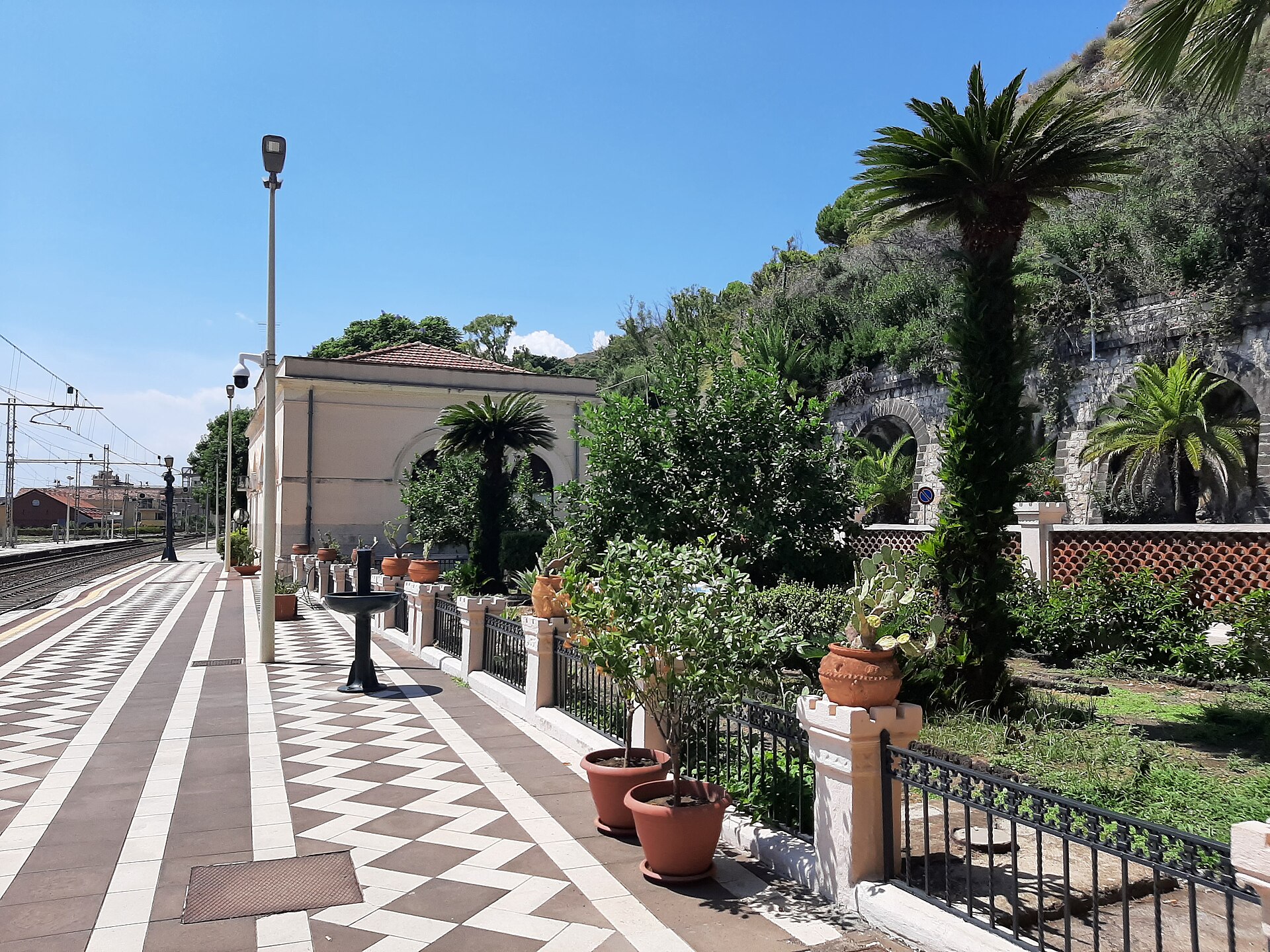
Fact-checked 22 July 2026. Transport details were checked against Trenitalia, Ferrovia Circumetnea and operators’ own websites. Sicilian timetables change for seasons, engineering work, public holidays and disruption; always search your exact date and last return before purchasing a non-refundable activity.
Yes, Sicily can be excellent without a car—but not with a car itinerary
The question “can I see Sicily without a car?” often receives one of two equally poor answers. One insists a car is indispensable everywhere. The other claims public transport makes the entire island easy. Reality is more useful: a car-free Sicily trip can be superb when you choose cities on strong transport corridors and accept that hill villages, nature reserves and remote beaches do not all belong in the same journey.
The gains are substantial. You avoid narrow old streets, ZTL restricted zones, parking searches, insurance excess and arguments about who drives after a winery. The east-coast railway sometimes runs only metres from the water. Intercity coaches arrive centrally in Palermo and Catania. A trip with fewer changes can leave more time for markets, squares and dinner. In exchange, you must manage a different friction: timetables that change on Sundays, tickets sold by separate companies, and the final kilometre from a station to a historic centre.
The decisive choice is therefore not which rail pass to buy. It is where to stay. An address five minutes from a station with direct services can be worth more than a romantic property on a hillside. Compare the options in where to stay in Sicily alongside this guide. If you later decide to hire a car for selected days, the rental-car guide sets out the practical counterarguments and traps.
Why the network looks peculiar: ports, coasts and a mountainous interior
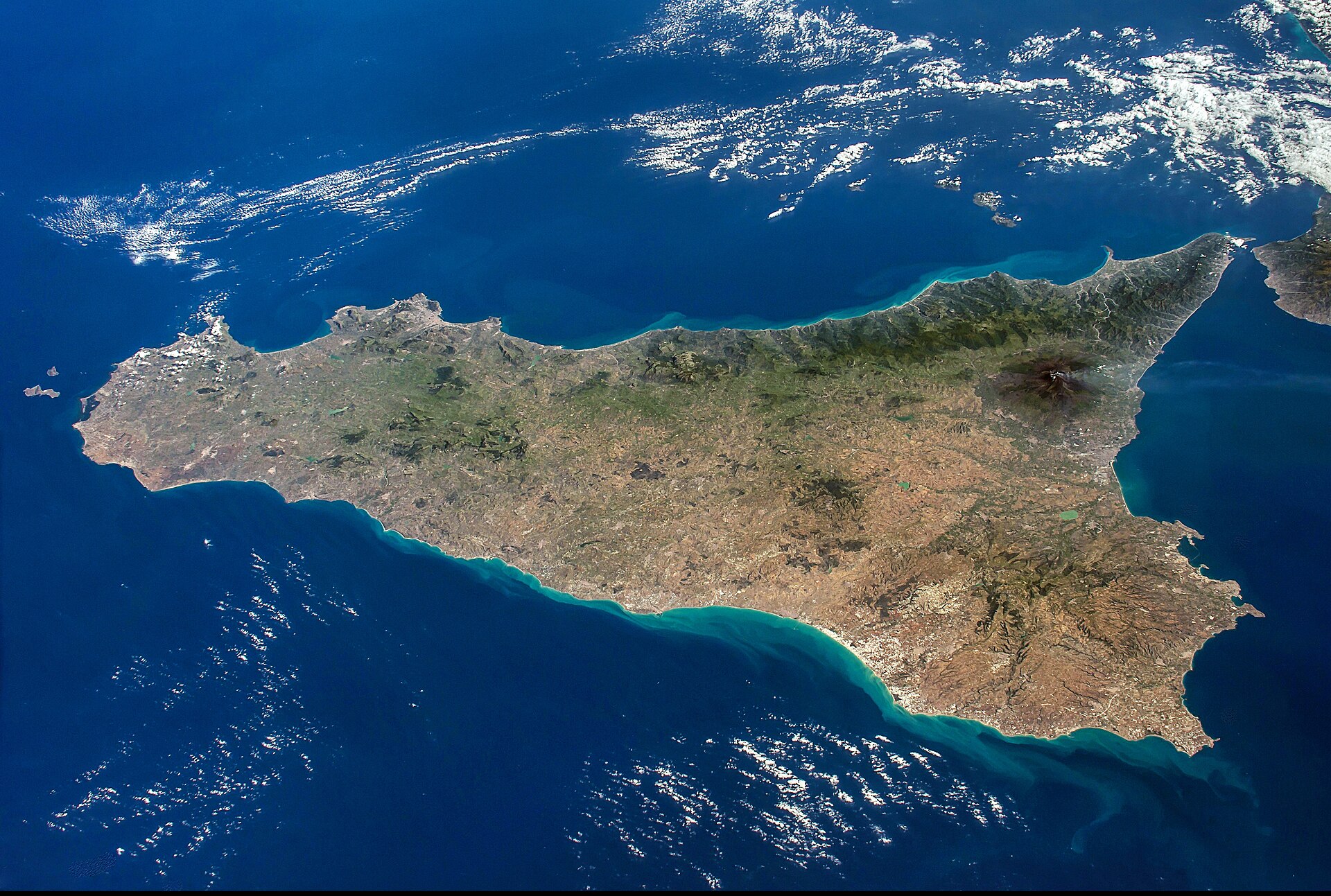
Sicily’s transport network is a historical map of commerce and geography. Its strongest rail corridors follow densely settled coasts: Messina–Catania–Syracuse on the Ionian side and Palermo–Cefalù–Messina along the north. Palermo also has metropolitan services and trains to Punta Raisi airport. Inland, mountains, inherited alignments and continuing infrastructure projects produce connections that are slower or more vulnerable. Two cities that appear centrally opposed may require a coach or a large railway detour.
Distance is only part of it. Sicily has multiple systems with separate roles. Trenitalia runs the national and regional rail network. Ferrovia Circumetnea, or FCE, operates Catania’s metro, a narrow-gauge line around part of Etna and its own bus services. Interbus/Etna Trasporti, SAIS Autolinee, AST and municipal companies cover different road corridors. Hydrofoils to smaller islands are operated in part by Liberty Lines. No single ticket or app invariably displays and sells every useful combination.
Historically, routes developed to connect ports, citrus country, sulphur mines and provincial towns—not to optimise a modern touring holiday. That helps explain why a coastal trip can be unexpectedly straightforward while a celebrated village 25 kilometres inland becomes difficult. A car-free itinerary succeeds by adopting this pattern as its structure rather than treating every map pin as equally accessible.
The three strongest ways to travel without a car
The east coast from a Giarre, Catania or Syracuse base
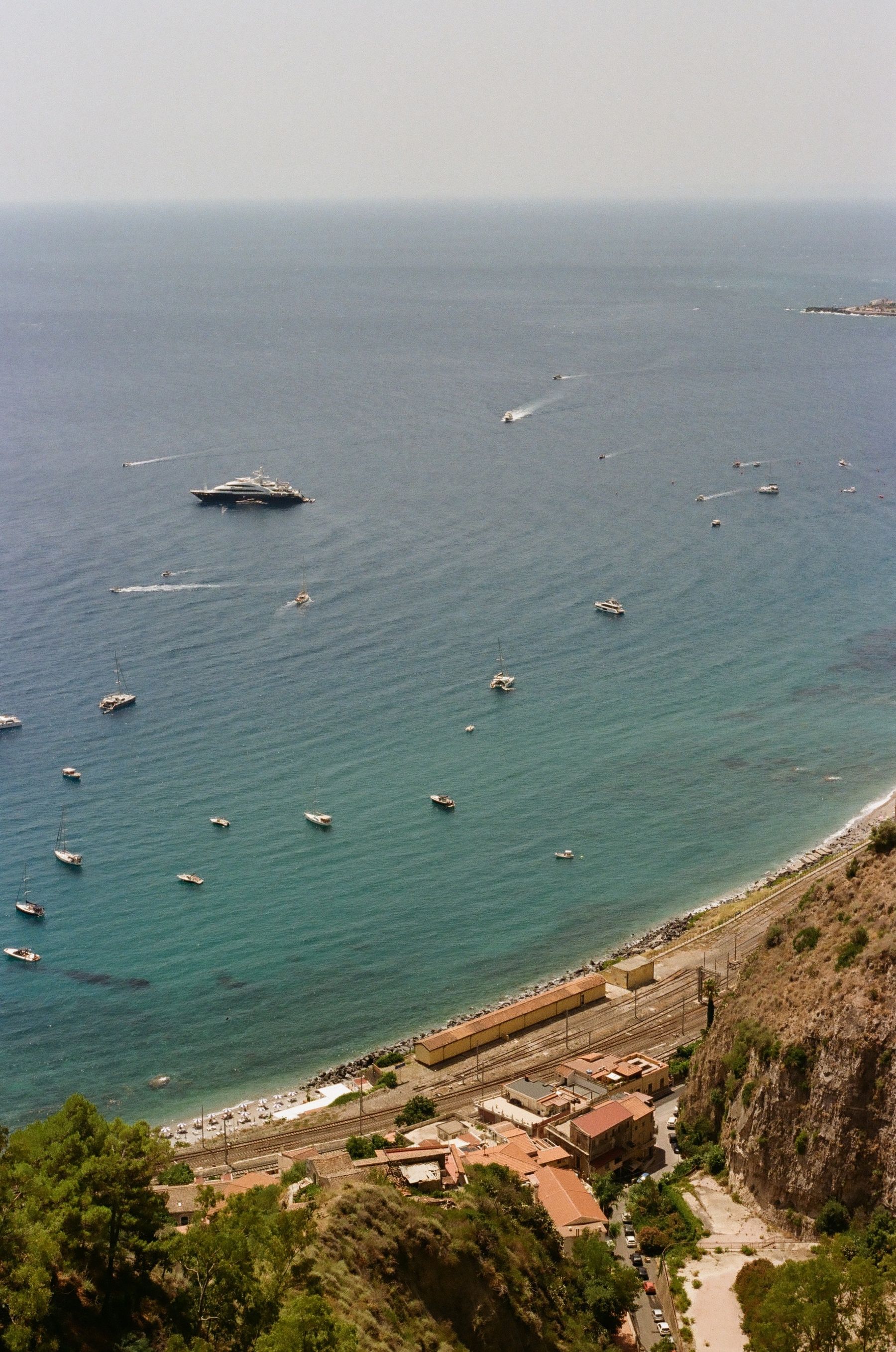
For a first car-free visit, the Ionian axis offers the broadest range. The railway connects Messina, Taormina-Giardini, Giarre-Riposto, Acireale, Catania and Syracuse. Trenitalia’s official Taormina Line page specifically highlights links to Catania, Acireale, Giarre, Fiumefreddo and Letojanni. City life, archaeology, coast and ordinary local towns can be combined without changing hotel nightly.
Giarre is strongest when the holiday needs a calm base and day trips in both directions. Its station is Giarre-Riposto and sits within walking distance of the centre, but check your address on a real map: the shore and parts of Riposto are farther away than the double name suggests. Trains to Taormina, Acireale, Catania and—depending on the service—Syracuse are realistic. Etna, Alcantara and small wine villages require more planning or an organised day.
Catania is better for the widest coach selection, late city life and simpler airport logistics. It is also noisier, and accommodation far from Centrale or a useful urban bus can erase the advantage. Syracuse is an excellent endpoint for Ortigia, Neapolis and the south-eastern Baroque towns, but a weaker base for repeated journeys north of Catania.
Palermo with Cefalù, Monreale and selected western outings
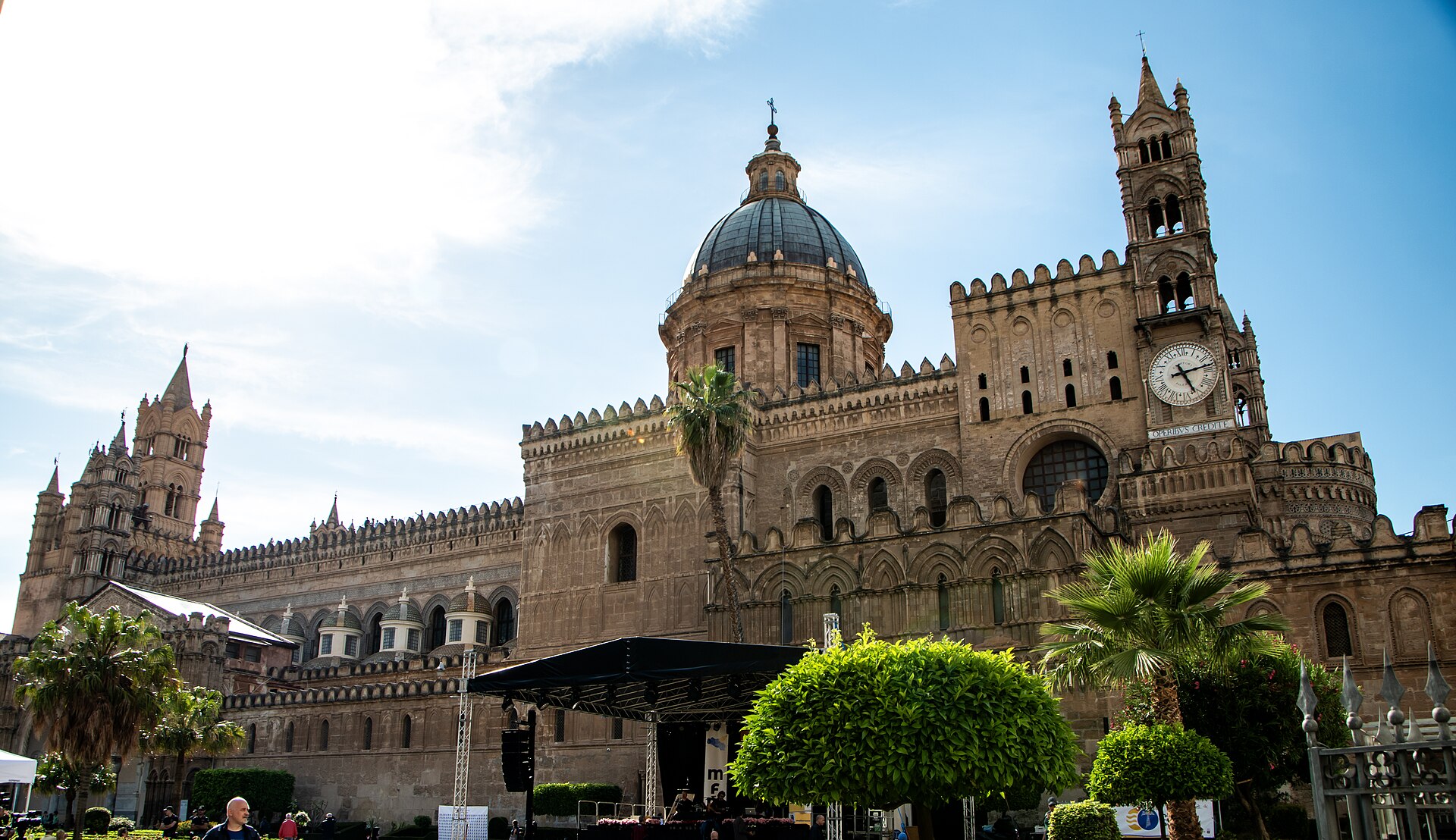
Palermo functions well without a car because much of its essential fabric lies inside a large but walkable centre and the airport has a rail connection. The north-coast line makes Cefalù the obvious day trip. Monreale needs a bus or taxi, yet the distance is short enough to solve the last mile without hiring a car. UNESCO’s Arab-Norman World Heritage property connects monuments in Palermo with the cathedrals of Monreale and Cefalù, creating an unusually coherent car-free cultural route.
Palermo is also a starting point for intercity coaches to Catania and other larger cities. That does not make the entire west easy. San Vito Lo Capo, Zingaro Reserve, Scopello, Erice, the salt pans and Selinunte may have combinations or seasonal services, but return choices can be scarce and multiple targets in one day unrealistic. Choose Palermo for the city and two or three defined excursions, not to prove that every western cove can be visited spontaneously.
A linear journey with a small number of strong bases
The most robust car-free tour moves forward instead of commuting across the island. One version uses Palermo for four nights, Cefalù for two, Giarre or Catania for four and Syracuse for three. It is not the shortest possible list of famous places, but transport days follow existing corridors. Another stays entirely in the east: two nights around Messina or Taormina, five in Giarre and three in Syracuse.
Each additional base should earn its place with at least two full experiences. Changing hotel to save 35 minutes on one excursion rarely wins after check-out, luggage and waiting. Research luggage storage before relying on it; not every smaller station has facilities, and a locker shown in a third-party app may be private, seasonal or gone.
Using trains without turning the holiday into a spreadsheet
Always search the official station name and actual travel date. “Taormina” generally means Taormina-Giardini by the sea, while the historic centre sits higher. “Giarre” is Giarre-Riposto. Catania has several stations, and Centrale is not automatically closest to every address. Syracuse station is on the mainland within walking distance of Ortigia, though luggage and summer heat make the final section feel longer.
As of the fact-check date, Trenitalia’s official Digital Regional Ticket page says its digital regional ticket is automatically validated at the selected departure time; paper tickets and other products may have different rules. Follow the instruction attached to the ticket you actually hold, not an old blog post. Buy or change within the stated deadlines, keep your phone charged, and save important details locally in case reception weakens.
Build the day backwards from the last sensible return. The absolute last service is not always sensible: one cancellation or missed connection may leave no alternative. If an evening performance finishes after rail service, make an overnight stay or taxi a conscious budget item. On lines undergoing works, Trenitalia may provide replacement coaches, but these can use different stops and take longer. RFI’s notice of 2026 engineering works shows why a live journey search and operator disruption notice outrank any static timetable.
Trenitalia’s Sicily regional information says bicycles travel free on regional trains bearing the bicycle symbol, with a free bicycle ticket still required; capacity remains finite. This can solve a final coastal stretch without committing to a complete cycling holiday.
Coaches: useful, but every operator is its own small universe
A coach is often better than rail between Palermo and Catania, from airports to city centres and to places without track. But “the bus” is not a unified system. Confirm the operator, exact stop, weekday, luggage conditions and sales channel. Catania has several departure areas; two companies serving the same destination may use different streets. In smaller towns, a stop may be a sign on a main road rather than a terminal.
SAIS, for example, displays its Palermo–Catania route with central stops and electronic ticket information. Interbus runs eastern routes and lists official sales points in places including Catania airport, Syracuse and Taormina. Use the operator’s own search for the current date, and take a screenshot of the stop. A general journey planner can reveal a route, but should not be the final authority at a seasonal change.
Sundays and public holidays are the classic trap. A commuter route that appears frequent Monday to Saturday may run sparsely or not at all on Sunday. Ferrovia Circumetnea’s official current lines and timetables page states in July 2026 that its narrow-gauge railway and bus services do not operate on Sundays and public holidays, while Catania’s metro has separate daily hours. It is a concrete reason why the name “Circumetnea” does not mean a tourist can circle the whole volcano on any chosen day.
Etna without a car: viable as an experience, fragile as improvisation
Etna is where car-free plans most often become overconfident. Public coaches reach selected gateways, while private transfers and guided tours collect from Catania, the Taormina area and occasionally coastal towns. Yet high-mountain access changes with volcanic activity, weather and season. An improvised chain of train, local coach and taxi can cost more and carry greater risk than a planned excursion.
Decide first what “Etna” means to you. If you want lava terrain and a volcano town, rail plus FCE or a coach to a place such as Randazzo—or a guided wine day—may suffice. If you want Rifugio Sapienza or Piano Provenzana and higher travel, purchase a service that states collection, altitude, guide, equipment and its closure plan. No responsible operator can guarantee access to a specific summit area regardless of conditions.
Read Etna independently, but translate “independent” into your transport context. Without a car, independence often means choosing and checking a responsible guide or transfer. It does not mean walking uphill from the nearest village stop.
Arriving through Sicily’s airports without a car
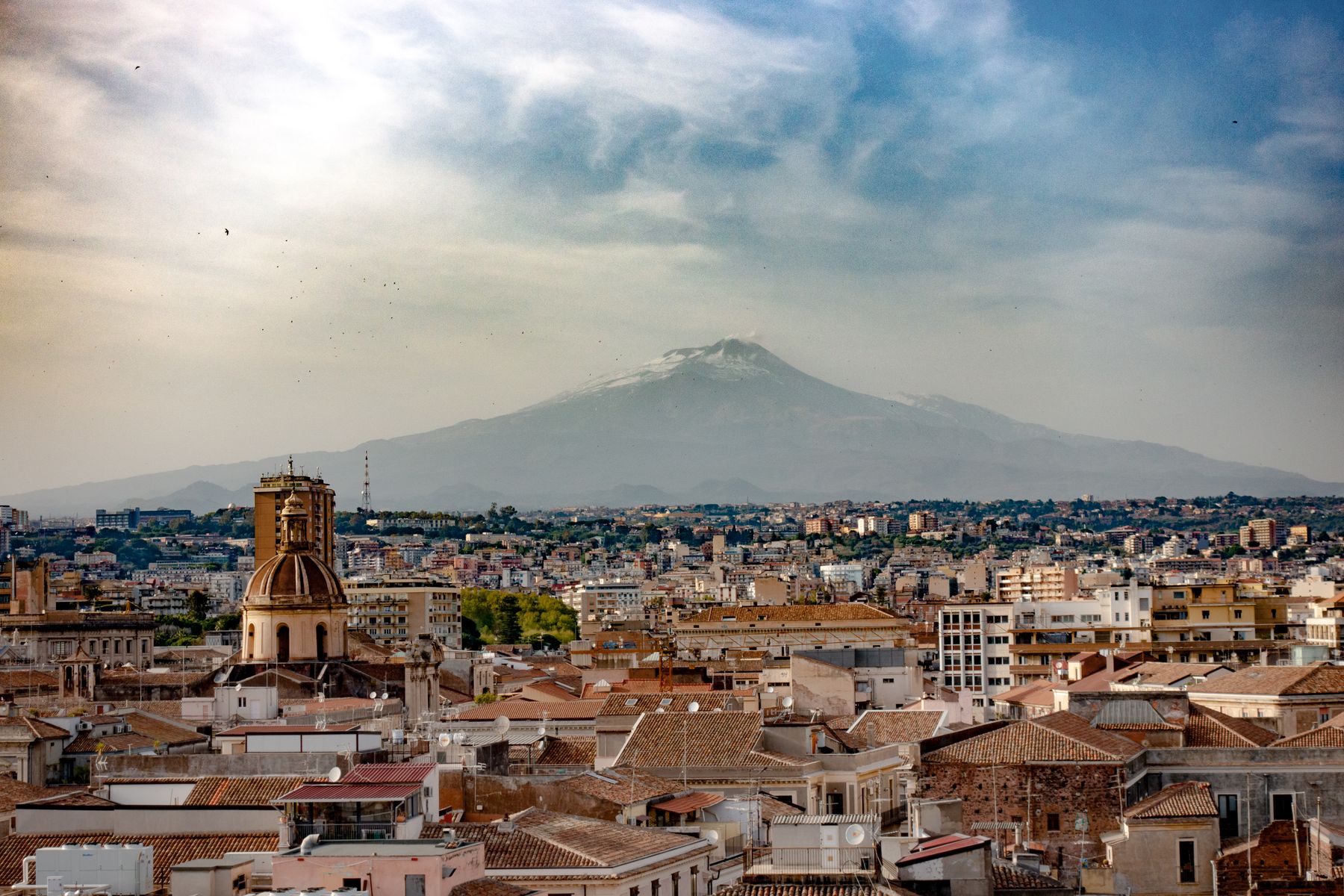
Catania Fontanarossa fits the east coast. Public transport connects it with Catania, and Trenitalia markets Fontanarossa Airlink as the bridge into the rail system. A practical trip to Giarre may involve the airport bus segment and then a regional train, depending on time and operations. Judge a late flight by the final complete connection, not merely by the last train. The local detail is in Catania airport to Giarre.
Palermo Falcone Borsellino at Punta Raisi is connected to Palermo’s railway network. That makes a city break straightforward, though late arrivals must still check intervals and engineering work. Trapani airport relies more heavily on coaches. When a fare is cheaper to the “wrong” side of Sicily, include the additional half or full travel day in its real price.
Islands, beaches and reserves: the last mile determines everything
The smaller islands can fit a car-free journey very well. Liberty Lines’ official route and booking site covers the Aeolian, Aegadian and Pelagie islands among other destinations, while live departures report conditions near sailing. The connection to the port must be planned separately: Milazzo, Trapani, Marsala and Palermo each work differently. Weather can cancel or alter hydrofoils, so an island day immediately before the flight home adds avoidable risk.
Beaches differ radically in access. Giardini Naxos, Letojanni and several north-coast towns have stations near settlement and water. Other celebrated bays require a bus, lengthy walk or seasonal shuttle. Zingaro is a walking reserve with no coast road; that is a conservation feature, not a transport failure. If you want an easy spontaneous swim every day, stay in a coastal town instead of engineering ten separate beach expeditions.
A concrete ten-night car-free plan from Catania airport
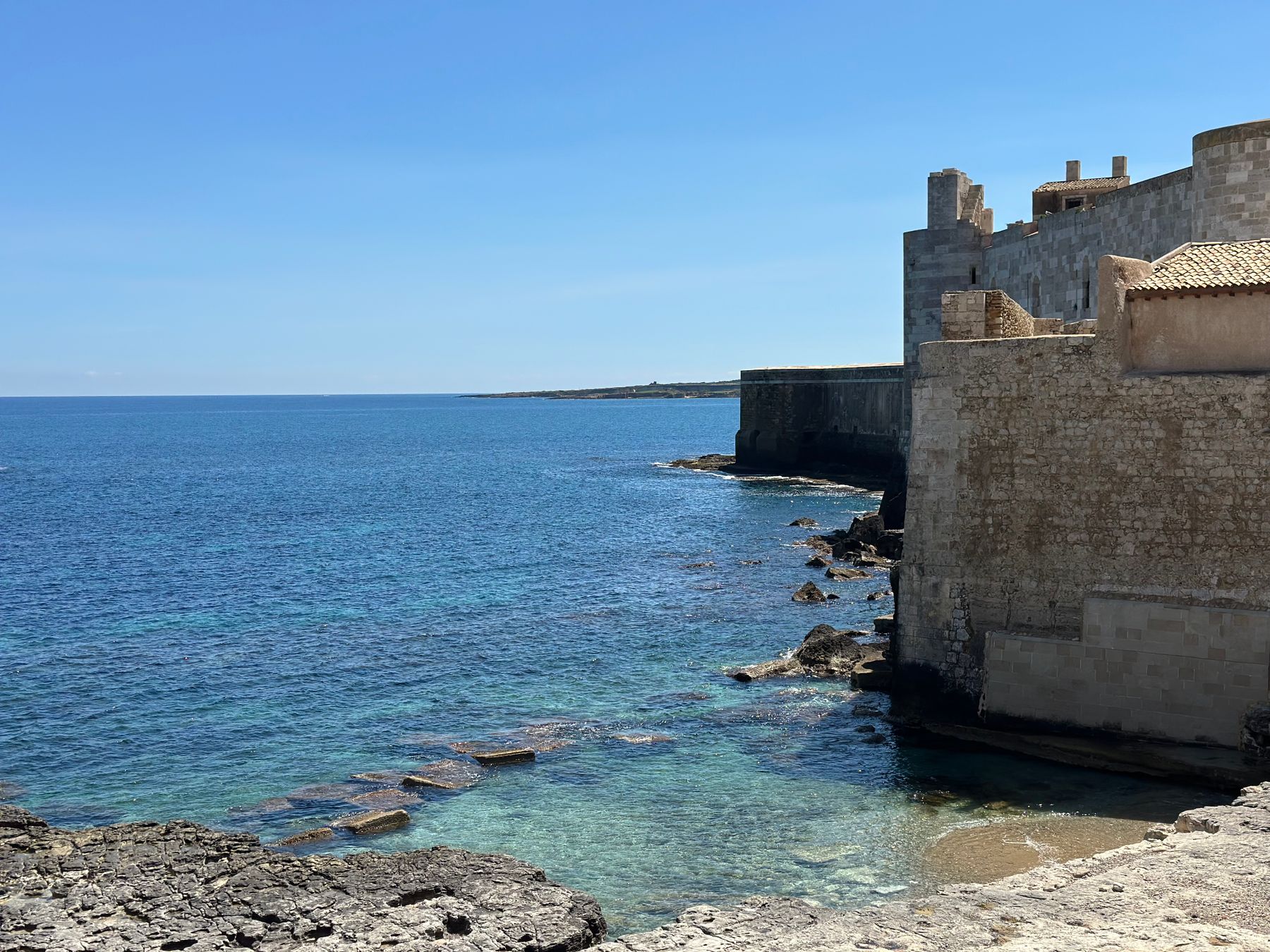
Spend the first four nights in Giarre near the station. Make day one local in Riposto; take the train to Taormina-Giardini and onward connection on day two; use day three for Acireale; book a clearly defined Etna collection for day four. Move to Syracuse for three nights. Give Ortigia one day, Neapolis and the wider city another, and choose Noto by coach or train according to the current timetable on the third.
Finish with three nights in Catania. Use one for the market, Baroque centre and monastery, another as a buffer or Aci coast outing, and the final morning for an easy departure. This plan requires only two hotel changes after arrival, protects against Etna weather and places you near the airport at the end. It excludes Palermo because an added trans-island journey would weaken a ten-night eastern trip. To combine east and west, allow at least two weeks or fly into one side and out of the other.
The overlooked benefit: car-free travel makes cities larger
With a car, a city is easily reduced to a parking problem and a checklist. Without one, the station, market street, neighbourhood between centre and sea, and late passeggiata become part of the journey. You see how residents move, where school pupils get off, and how one coastal settlement relates to the next. It is not romantic at every moment: a delayed regional train remains a delayed train. But its slowness can reveal geography that the motorway hides.
That benefit depends on not copying a driving route. A car-free trip should contain fewer isolated agriturismi, fewer “secret” coves and fewer three-town days. It can offer more Palermo, Catania, Syracuse, Cefalù, Taormina, Giarre and ordinary coast life. If you are choosing which half suits you, use eastern versus western Sicily and make transport one of the primary criteria.
Conclusion: choose a network, not a wish list
Sicily without a car works best as a series of deliberate stays on strong corridors. The east coast provides the easiest combination of city, sea and archaeology. Palermo is a compelling car-free metropolis with Cefalù and Monreale. A linear trip with few bases is almost always stronger than daily crossings of the island.
Choose accommodation by station and stop, check Sundays and holidays, work backwards from a safe return, and consult operators’ own websites close to travel. Buy an organised solution when the final kilometre to Etna or a nature site would otherwise become the day’s weakest link. The missing car then becomes a design choice rather than a deficiency: fewer places, more time, and far less energy spent on parking and restricted streets.