Fact-checked 22 July 2026. Reserve access, parking and opening hours can change. Check Vendicari's official information and individual cultural sites before departure.
Three places that only work when the pace is right
Noto, Vendicari and Marzamemi are often marketed as an easy day trip in Sicily's south-eastern corner. Their map distances are short, but they require three different ways of visiting. Noto is a rebuilt Baroque town read through streets, façades and churches. Vendicari is a protected wetland and coastal landscape where heat and walking time govern the day. Marzamemi is a former tuna-fishing and processing settlement whose historic core now lives intensively from tourism.
You can see a selection of all three in one long day, but you cannot understand all Noto, walk every Vendicari trail and encounter Marzamemi quietly before lunch. The strongest plan has two days: Noto on the first, then one coherent sector of Vendicari and Marzamemi on the second. With only one day, deliberately edit the route to Noto in the morning, Vendicari's Tonnara sector and Marzamemi in late afternoon.
This guide explains what to leave out as well as what to include. Connect it to our overview of Sicily's main sights and guide to the best time to visit. The south-east works as its own travel cluster with Syracuse, Noto, the nature coast and perhaps the Ragusa area, not as a quick detour from Palermo.
Noto is a town made by catastrophe and planning
The great earthquake of 1693 destroyed towns across south-eastern Sicily. Older Noto stood at what is now Noto Antica, while the new town was laid out about eight kilometres farther downhill towards the sea during the eighteenth century. Golden limestone and theatrical façades are therefore not a medieval town that happened to acquire Baroque decoration. They are an organised response to loss, with new street grids, squares and representative buildings.
Noto is one of eight towns in UNESCO's Late Baroque Towns of the Val di Noto property, alongside Caltagirone, Militello Val di Catania, Catania, Modica, Palazzolo Acreide, Ragusa and Scicli. UNESCO stresses both the architectural quality of the late Baroque and the exceptional collective response to the earthquake. Read the official UNESCO description for that common frame.
This changes how you walk through Noto. Façades should be judged not only for decoration but for their position within a new urban system. Broad axes, steps, church angles and aristocratic balconies create public theatre. Yet the city occupies sloping ground, and the higher residential quarters show a more everyday scale than the monumental route.
Corso Vittorio Emanuele without a photo race
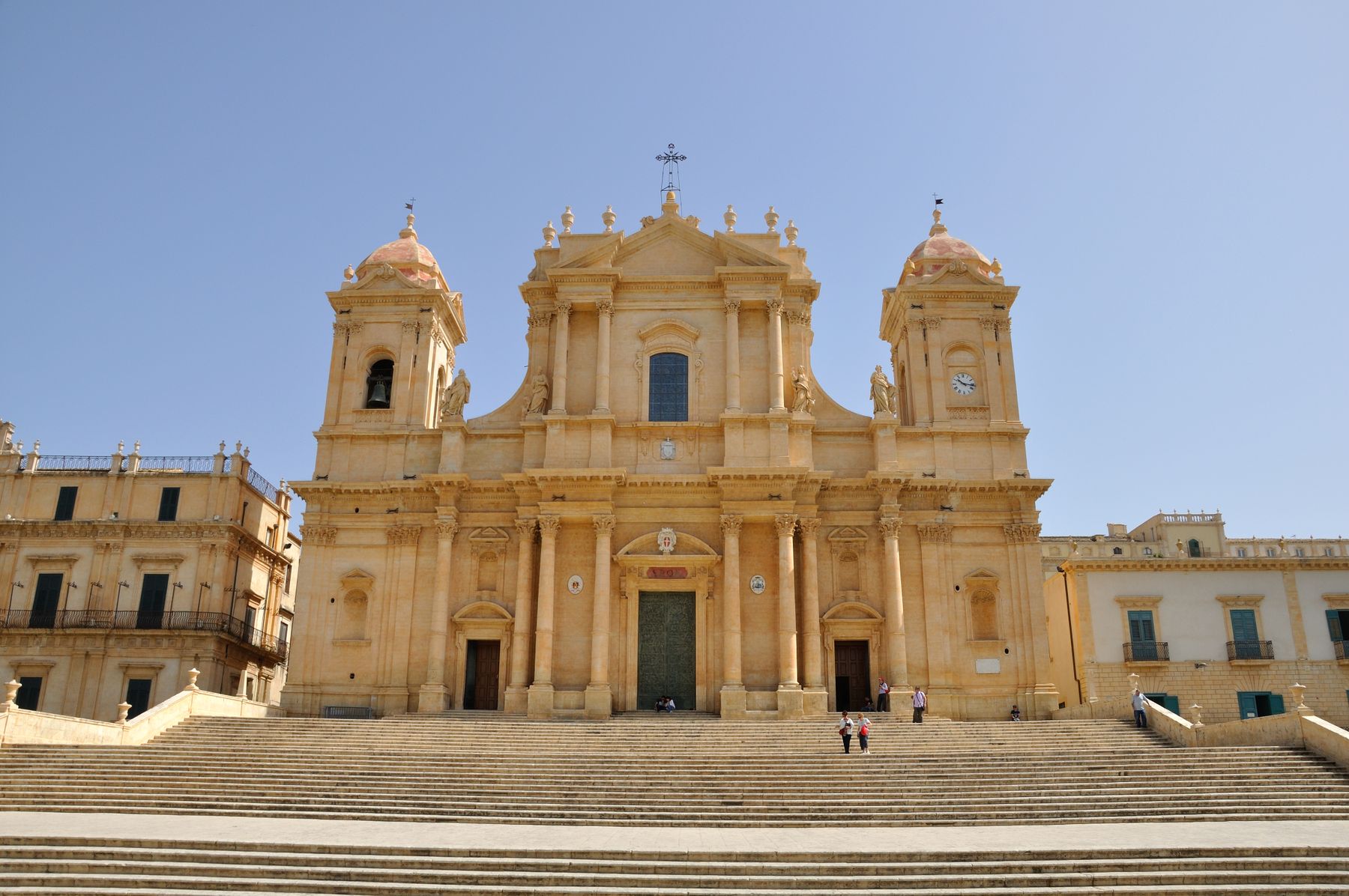
Most visitors begin at Porta Reale and follow Corso Vittorio Emanuele. The route passes Santa Chiara, the cathedral, Palazzo Ducezio and several churches before reaching San Domenico. It is a logical introduction but becomes superficial if every site receives three minutes. Select one church interior, one palace or viewpoint and one side street for sustained attention.
Noto Cathedral's broad steps and façade dominate the centre. Its recent history of collapse and reconstruction is a reminder that World Heritage demands active conservation; a historic city is not finished because it appears on a list. Opposite it, Palazzo Ducezio supplies a civic counterweight. Together they stage the relationship between church and municipal representation.
Santa Chiara, when opening and access allow, offers a different spatial experience, while San Domenico and its square show Rosario Gagliardi's curved Baroque language. Palazzo Nicolaci's imaginative balcony brackets became a symbol, but the building belongs to an aristocratic setting and street, not just a collection of stone faces for cameras. The official Visit Sicily guide to Noto provides an institution-based overview.
Then walk upwards away from the main axis. Residential streets, smaller churches, empty buildings and local shops correct the image of Noto as perfect scenery. Tourism has revived restoration and businesses, while also creating seasonal pressure and an economy around images. Buy from a local business and avoid blocking residents' doors or steps.
Noto Antica: the absent city
Noto Antica lies apart from the modern Baroque town and needs separate transport and time. Ruins, rock features and landscape mark the former city's site before 1693. It is not a fully exposed Pompeii, and that fragmentation is its interest: the urban whole must be imagined from terrain and remains.
On a two-day introduction, add Noto Antica only if archaeology and earthquake history are central. Otherwise the new town and Vendicari provide enough. Old ruins may have uneven ground and limited interpretation; verify access, do not enter closed structures and wear suitable shoes.
The connection between the two Notos matters more than an extra stop. The old site expresses catastrophe's break; the new city expresses a planned social response. Knowing this turns Baroque architecture from nostalgic ornament into political and civic reconstruction.
Vendicari is a wetland before it is a beach
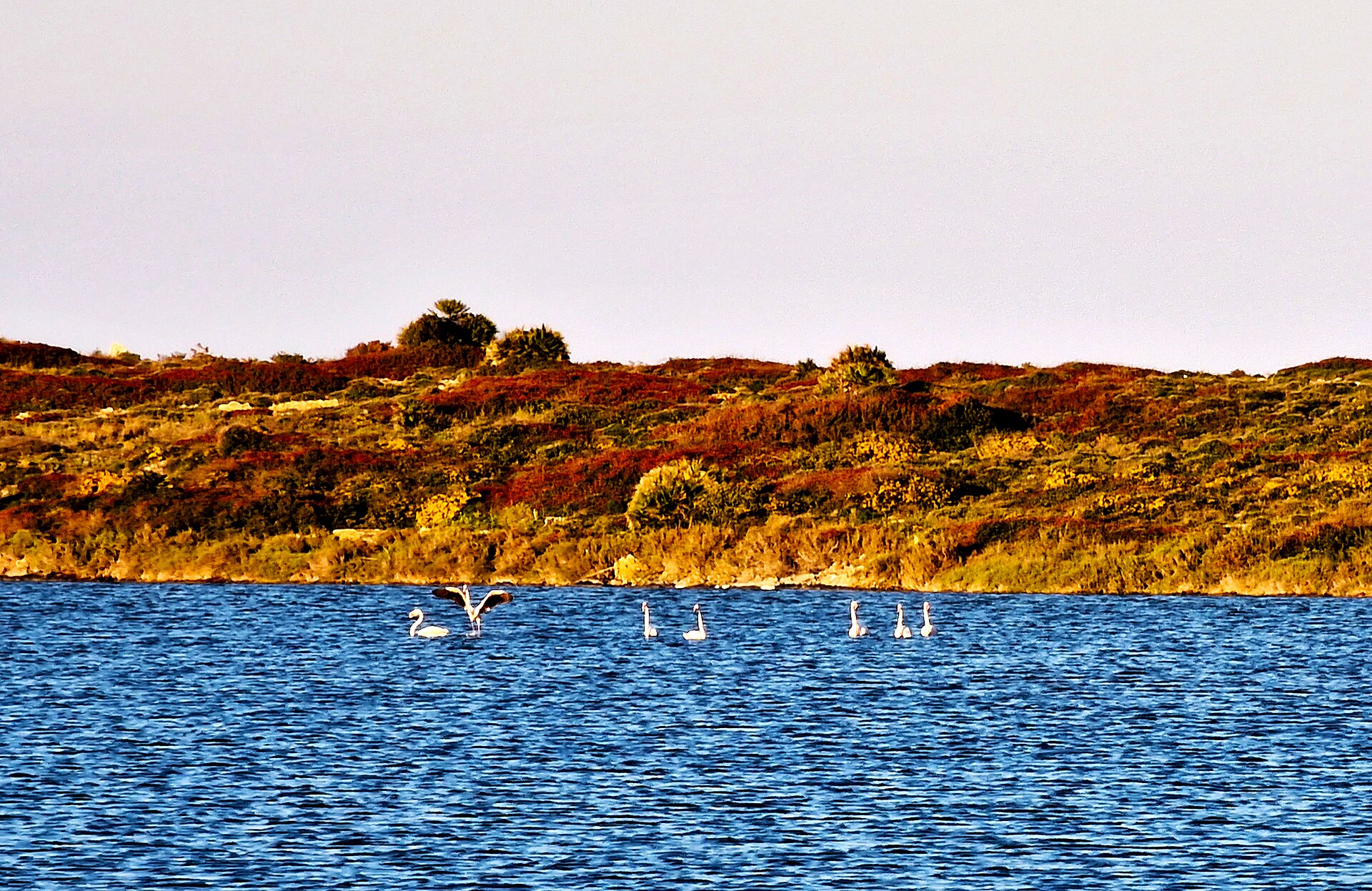
Riserva Naturale Orientata Oasi Faunistica di Vendicari was established on 14 March 1984 and covers 1,512.43 hectares according to the regional reserve system. It protects coastal lagoons, saline wetlands, dunes, rocky shore, beaches and Mediterranean vegetation. It is also a Ramsar wetland of international importance and a crucial resting place for migratory birds.
A beach visitor therefore enters a habitat, not a resort without buildings. Birds must be watched from a distance, paths and barriers respected and waste carried out. Flamingos appear at certain periods but can never be guaranteed on a particular day. Water, food and migration govern birds, not a visitor calendar.
The regional ORBS record for Vendicari documents its size, establishment, management and status. Use it with current access information. Fire danger, conservation or maintenance may close a trail that was open last week.
Choose one Vendicari sector
The northern area around Eloro and Marianelli links archaeological surroundings, open beaches and a wilder shore. Marianelli is often associated with a freer, less organised beach culture; everyone must still follow reserve rules. Distance from parking and entrance forms part of the visit, particularly in heat.
Calamosche is among Sicily's most widely shared coves in photographs. It sits between rocky projections and requires a walk from the access area. The bay is relatively small, and its fame creates pressure in high season. It is not an obvious choice for reduced mobility, young children in severe heat or a group requiring toilets, lunch and parasol service.
The central Tonnara sector is the best first choice for a culturally minded day trip. Wetland, coast, Torre Sveva and buildings from tuna-fishing history meet here. It offers nature and history without making a particular bathing cove the sole objective. The structures describe coastal production and surveillance long before nature tourism.
To the south, Cittadella dei Maccari combines Byzantine remains and coast. It deserves its own time and should not be compressed after Calamosche and Tonnara in one afternoon. Visit Sicily's official Vendicari guide describes the different routes and stresses water, food, a hat and suitable footwear.
What you need is not available inside the reserve
There are no bars or restaurants inside the nature reserve. Carry ample water, snacks or lunch, a sun hat, protection and shoes for uneven dusty paths. A small rubbish bag makes it easy to remove everything. Binoculars are more useful for birds than approaching wildlife with a phone.
Natural shade is limited. In July and August, a short midday route can become physically demanding, especially for children and older people. Arrive at opening or later where rules and closing allow, and turn around before the water is gone. Swimming does not remove heat exposure on the walk back.
The sea may be rough, and nature beaches do not necessarily have lifeguards. Judge wind, waves and currents at the site. Swimming shoes can be useful but do not make conditions safe. Also see our needs-based guide to the best beaches in Sicily.
Marzamemi: from tuna fishery to tourism village
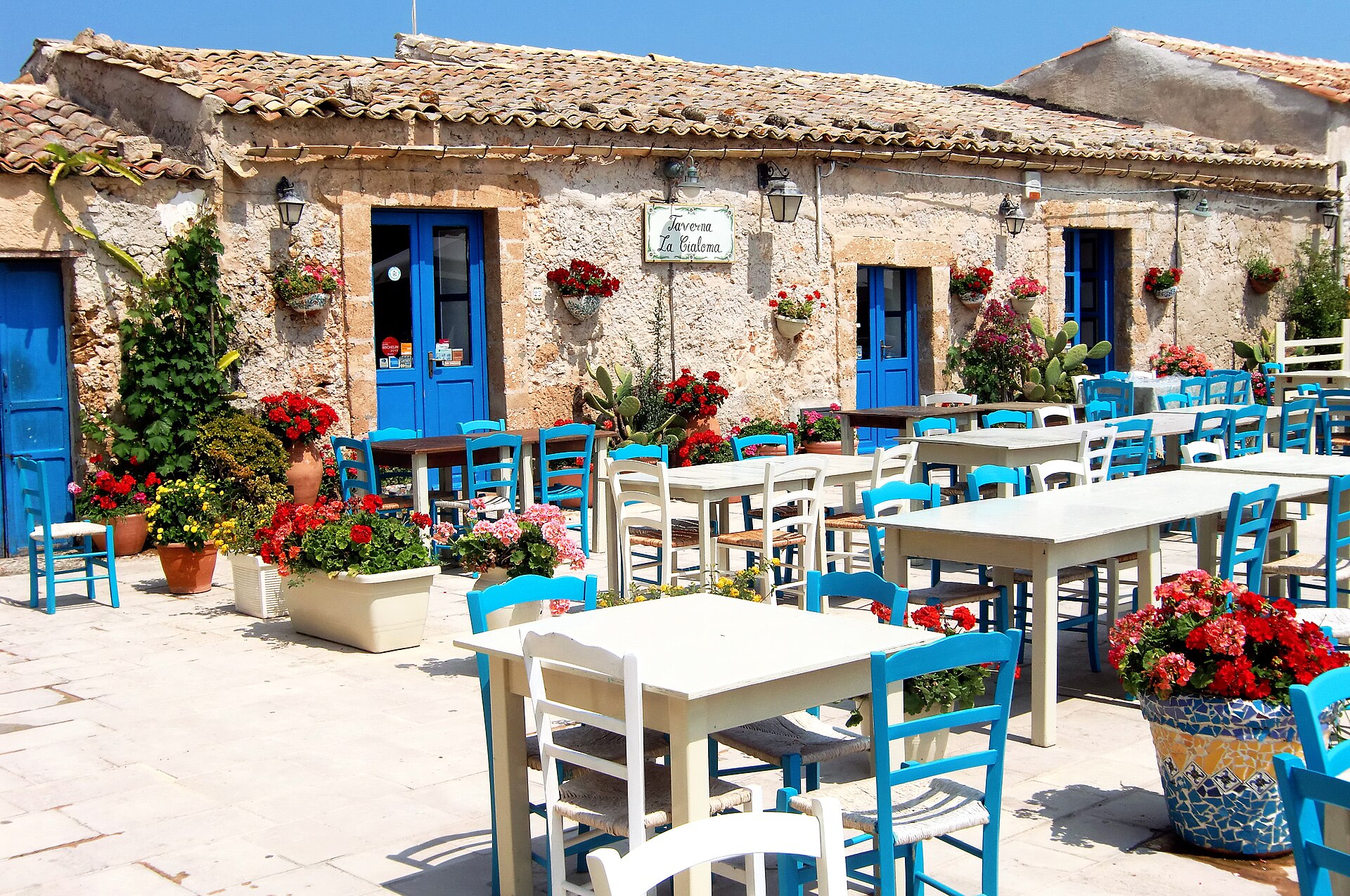
Marzamemi lies on the sea in the Municipality of Pachino. Its historic identity is tied to the tonnara, organised tuna fishing and processing, and commerce across the south-eastern Mediterranean. In 1752, Palazzo del Principe di Villadorata and the tonnara church were built while the complex developed. The official municipal description of Marzamemi provides the local frame.
Piazza Regina Margherita, low fishermen's houses, churches and tuna buildings form the familiar core. Its scale is small, so visitor numbers transform it quickly. A quiet shoulder-season morning and an August evening covered in restaurant tables are almost two different destinations.
Tuna history should not be romanticised as unchanged folk life. Production shaped buildings, labour, wealth and harsh working conditions; the centre is now heavily directed towards food, accommodation, events and photography. That does not make the town false, but requires a distinction between physical heritage and its current economy.
Walk from the square to the harbour edges and see how the settlement faces water. Read the buildings before choosing a restaurant. The regional Visit Sicily page on Marzamemi offers official orientation, while businesses themselves must provide today's menu and hours.
Food and wine without automatic quality labels
Marzamemi and Pachino are associated with fish, tuna products, tomatoes and south-eastern wines. A local name on a menu, however, proves neither origin nor quality. Ask where fish and ingredients came from, what is seasonal and what was produced on site. Contemporary tuna fishing and species also raise sustainability questions; “traditional” does not cancel modern environmental concerns.
The Pachino area is known for tomato cultivation, but protected names have precise rules, and not every small tomato is automatically certified Pomodoro di Pachino IGP. Taste without turning a trade designation into folklore. The same applies to Nero d'Avola: the grape is associated with the south-east, but a wine's origin and appellation appear on its label.
Reserve dinner in high season if a particular restaurant matters, or accept choosing by availability. No guide can honestly identify a permanent “best” table. View, noise, kitchen style, budget and service needs make different answers right for different people.
Two days: the plan that gives each place room
On day one, reach Noto early and walk Corso Vittorio Emanuele before heat and day groups peak. Choose two interiors and climb into the higher streets. Pause for lunch and rest at midday. Return in late afternoon as limestone takes warm light, or use the time for one gentle local excursion without adding another major town.
On day two, choose one Vendicari entrance by interest and physical condition. The Tonnara sector provides a broad introduction; Calamosche suits visitors for whom the cove and walk are the objective; north or south suit longer natural and cultural trails. Arrive early with supplies and do not spend the hot hours chasing entrances.
After a pause and perhaps a swim at your accommodation, drive to Marzamemi in late afternoon. Walk as light falls and eat there if it suits. Plan the return, and keep the driver alcohol-free. Two days make space both for nature's rules and for the towns' evenings.
One day: an edited version, not three complete visits
Begin in Noto around opening time and spend two or three hours on the main axis and one side street. Eat an early simple lunch, or buy food, water and anything else you need before entering the reserve. Drive to the central Vendicari entrance and choose the Tonnara area; do not then move the car to Calamosche.
Leave the reserve well before closing and before the group is exhausted. Drive to Marzamemi for a walk and early dinner. If Noto takes longer, shorten Marzamemi instead of rushing through nature. If heat is extreme or access changes, visit Noto and Marzamemi and save Vendicari for a safer day.
This is a car-based plan. It is not a precise public-transport itinerary because the last mile to reserve entrances and links to Marzamemi may be weak or seasonal. A private driver can solve driving but not the nature walk.
Transport, parking and choosing a base
Noto has a railway station, although it lies lower than parts of the centre, and walking with luggage or in heat must be counted. The train can work for a pure Noto day from Syracuse. Vendicari and Marzamemi generally require a car, pre-booked transfer or a specific seasonal excursion; do not assume frequent coastal buses.
By car, follow local parking zones and avoid restricted historic areas. Parking at reserve entrances may be private or seasonally regulated. Leave no valuables visible and never block emergency or farm access. Read our Sicily car-rental guide before the route.
Noto is the most atmospheric base for evenings and architecture. Avola can be practical for beaches and road connections, while Pachino or Marzamemi offer proximity to southern Vendicari and the coast. Syracuse is a larger base with more connections but longer daily driving. Choose by the trip's centre of gravity, not the idea of one central base for all Sicily.
Season changes what the combination can deliver
Spring offers flowers, milder walking and migratory birds, while the sea may be cool. Summer brings swimming, full restaurant life and long evenings, but also severe heat, parking pressure and crowds. Autumn can combine warm water, migration and calmer towns. Winter makes Noto and wetland birds rewarding, while Marzamemi has fewer visitor services.
Noto's Infiorata draws large numbers around decorated Via Nicolaci; it is a special event, not normal conditions. If the festival is your purpose, reserve accommodation and transport early. If architecture is your purpose, another week provides more space.
In every season, the day's weather governs Vendicari. Severe heat, wind, storms or fire danger can make a plan irresponsible. The towns absorb changes; the reserve should not be forced to fit a dinner booking.
Accessibility and travelling with children
Noto has slopes, steps and historic paving, but its main axis can be experienced in an edited route. Ask individual monuments about lifts, ramps and entry; “accessible city” is too broad a promise. Marzamemi's centre is compact, though uneven surfaces, kerbs and dense furniture create obstacles.
Vendicari is natural terrain with dust, sand, distance and limited shade. A pushchair that works on asphalt may not work here. With children, choose a short route, early time and abundant water. Bird hides, ruins and tracks can make the visit engaging when the sole goal is not reaching a beach.
No one should wait in a hot car while others “just see the cove”. Split the group if appropriate, or choose a serviced beach outside the reserve. A good plan is one everyone can complete without asking a nature site to fit unrealistic expectations.
The common story is change
Noto, Vendicari and Marzamemi initially resemble three separate attractions: Baroque, beach and fishing village. Together they describe adaptation. Noto moved and rebuilt after the earthquake. Vendicari protects dynamic wetlands and coast from pressure. Marzamemi shifted from tuna production towards a visitor economy while old buildings continue to shape identity.
See them over two days if possible. Choose one reserve sector, walk behind Noto's principal façade and read Marzamemi's tonnara before its restaurant tables. The south-east then becomes more than honey-coloured and turquoise photographs: it is an inhabited landscape where catastrophe, labour, nature and tourism continue to negotiate space.