Fact-checked 22 July 2026. Nature-reserve access, reservations and parking rules can change because of fire risk, weather and official decisions. Always check the relevant official source on the day.
The best beach depends on the day you want
Sicily has more than a thousand kilometres of coastline, but there is no single, stable winner called “the best beach”. A shallow sandy shore that works with young children is rarely the same cove that offers the most interesting snorkelling. A dramatic nature beach may require a hot, unshaded walk, while an urban beach may look less romantic in a photograph yet work far better without a car. Wind direction, swell, season and time of day can also transform the same place.
This guide therefore does not rank the coast from one to ten. It helps you choose by need, geography and real access. First decide whether the day should offer easy swimming, clear water over rock, a protected landscape or a beach you can walk to from town. Then choose among the options in the same part of Sicily as the rest of your trip. Driving three hours each way for a famous cove rarely makes a better holiday than learning how your local coast works.
If you are still choosing a base, our guide to where to stay in Sicily explains the differences between the Ionian east, the sandier north-west and the more open south-east. If beaches form part of a wider journey, the seven-day itinerary gives a realistic sense of distance.
Understand the coastline before choosing a name
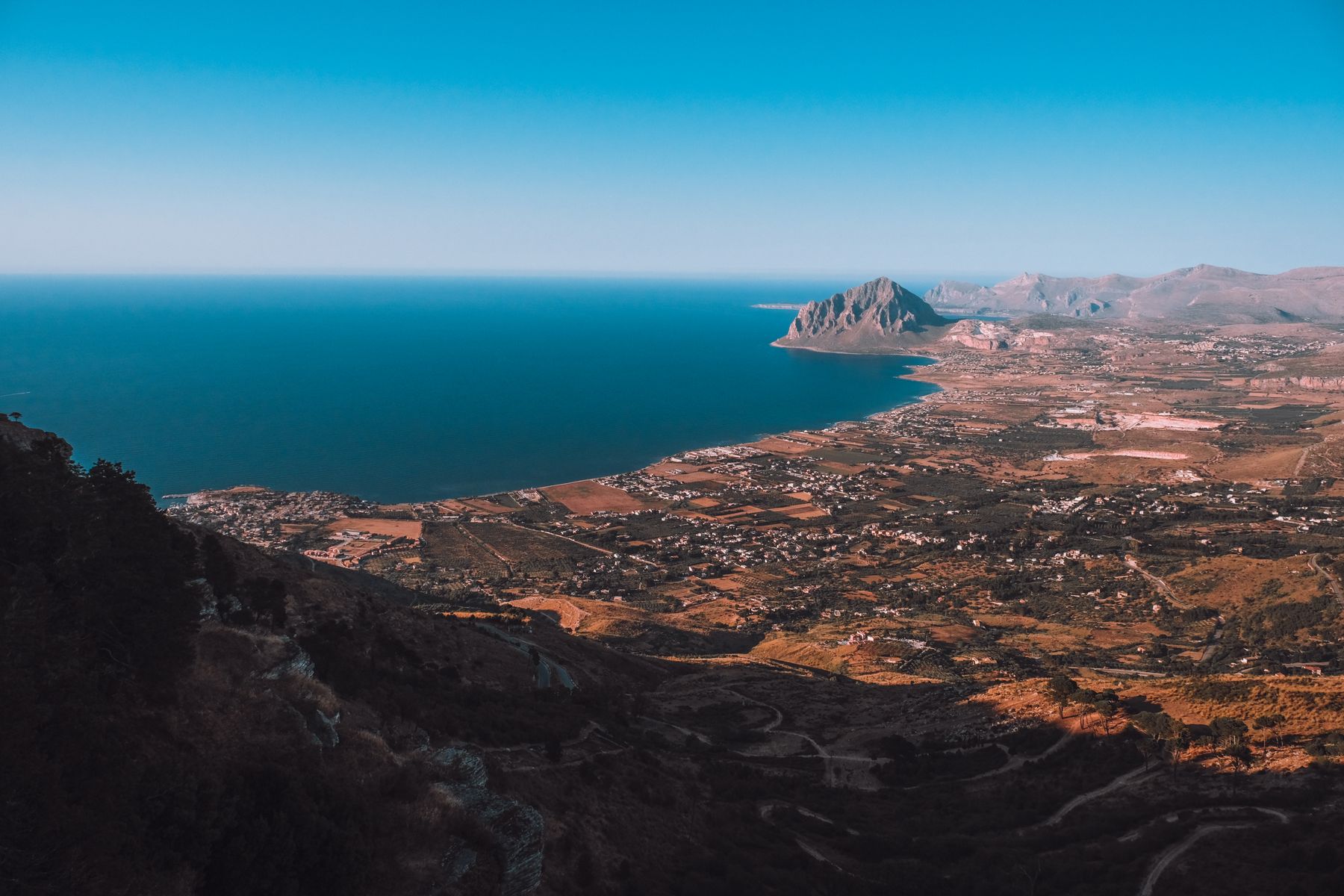
Sicily's beaches come from different geologies. The north-west around San Vito Lo Capo has pale sand and limestone mountains. The Ionian side below Etna is marked by volcanic material, pebbles and rocky coves, interrupted by broader gravel and sand stretches. The south-east around Avola, Noto and Pachino has long sandy shores, limestone coves and wetlands. The southern Mediterranean coast is open, windy and often less densely developed. The smaller islands have forms of their own: Favignana's tufa quarries and rock pools, the Aeolian Islands' volcanic shores and Lampedusa's limestone coves.
Even the term “sandy beach” conceals large differences. Sand may be fine or coarse, pale or dark, and the water may deepen within a few metres. Pebbles often accompany clear water, but swimming shoes and a padded mat become useful. A bay can be calm in one wind and rough in another. No responsible guide can promise flat water, lifeguards or child-friendly conditions every day. Look at the sea, follow local flags and signs, and turn back when currents, waves or access feel unsafe.
The regional tourism authority gathers coastal areas and named places on Visit Sicily's official beach page. Use it for orientation, then consult the reserve or municipality for today's access. Conservation is not an optional detail around a beach visit; it determines how many people a vulnerable place can support and what you may bring into it.
For young children and easy days: choose space and simple access
Families usually gain more from a roomy beach with a short route to toilets, food and shade than from the most photographed inlet. San Vito Lo Capo's town beach in the north-west combines pale sand, a substantial town and nearby services. It is extremely popular and can be packed in July and August, but the town itself makes logistics intelligible. Arrive early or travel in the shoulder season if you want the broad shore to feel spacious. Visit Sicily presents San Vito Lo Capo as both a coastal destination and a gateway to the surrounding landscape.
Mondello lies close to Palermo and is the practical option when you want to combine a major city with sand. The long pale bay includes both free sections and private lidos, but summer traffic and demand make it more hectic than promotional images suggest. For a car-free traveller, its connection to Palermo is the principal advantage. Cefalù's town beach offers a similar combination of railway town, historic centre and swimming. You can walk from the station to the centre and coast, making Cefalù much easier without a car than many isolated coves. See the official introduction to Cefalù, and check current local transport separately.
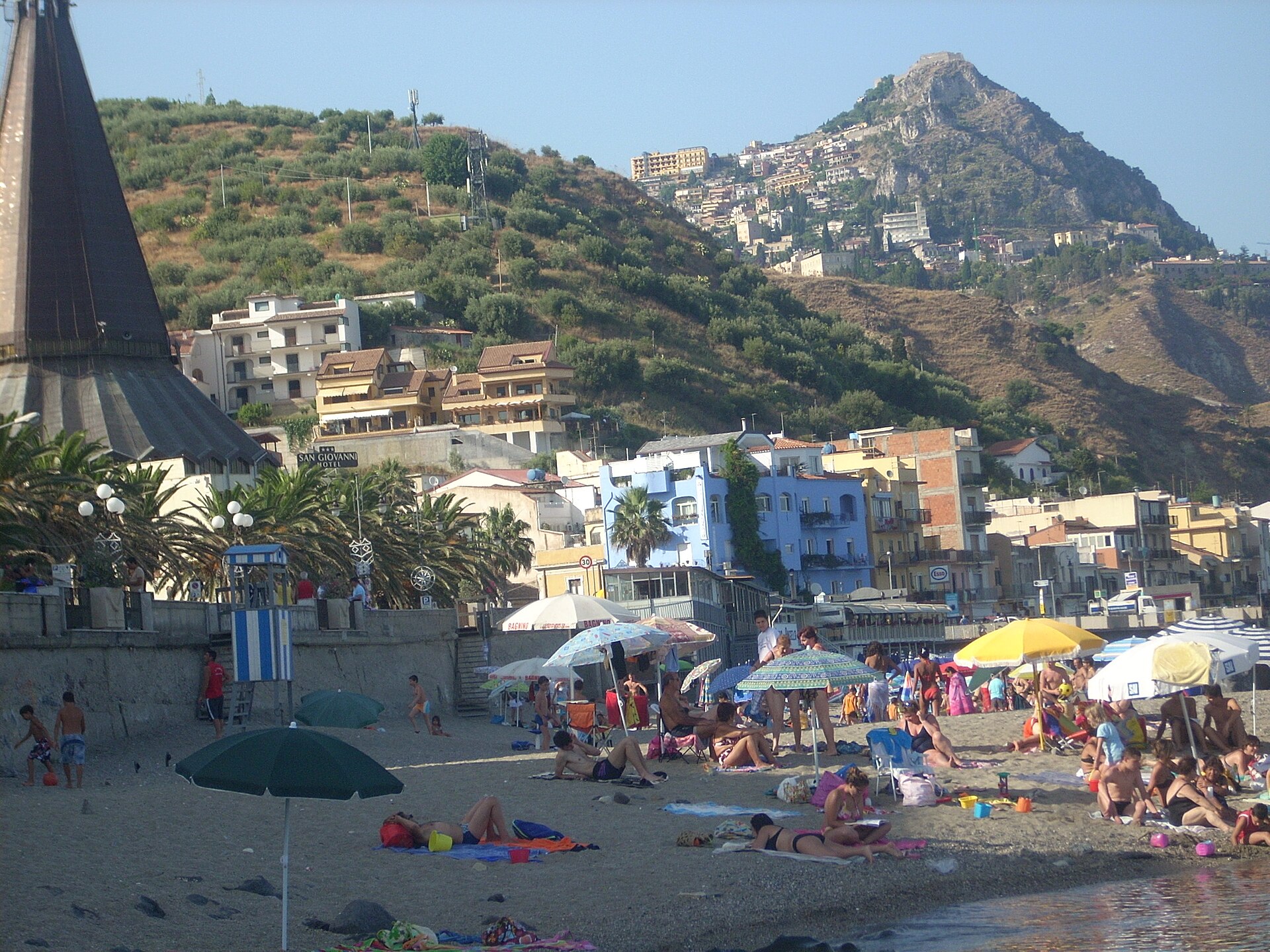
On the east coast, Giardini Naxos has several sections with different mixtures of sand and pebbles and a complete resort town behind them. Fontane Bianche south of Syracuse is known for paler sand and some shallower water, but it is developed, busy and dependent on local access and parking. Neither place is secret. Their strength is that a family can interrupt the beach day, eat, buy necessities and return without a long nature hike.
Even on a “family beach”, an adult must assess the conditions that day. Shallow water can receive onshore waves, and the change to deeper water varies along a single beach. Shade is usually something you rent or carry; natural shade is scarce. In midsummer the sand becomes painfully hot, while ultraviolet exposure remains high even when a sea breeze makes the air comfortable.
For car-free travel: an urban beach is an advantage
Cefalù is the clearest example of a Sicilian beach day by train because the railway, historic town and shore are in a walkable relationship. It is possible to see the Norman cathedral, have lunch and swim without transferring to an isolated coast. Popularity is the price. Early morning and late afternoon provide more space and better light, while the middle of the day is most pressured.
In Palermo, Mondello is accessible by local transport, although traffic queues and crowded buses are part of the summer reality. Check the current route with the local operator instead of trusting an old blog post. In Syracuse, the city waterfront provides views and some rocky swimming points, while a conventional sandy day requires more planning. Catania's La Playa is a long sandy coast south of the centre, but access, club sections and the transport experience vary; choose it for proximity to the city rather than as a representation of the entire east coast.
An important rule is that a railway station shown on a coastal map may not be beside the beach seen on social media. Small regional buses can be seasonal, and the last kilometre may lack pavement or shade. Make being car-free an asset by selecting a real coastal town. An “untouched” beach that needs taxis both ways and a reliable phone signal for collection is not necessarily the simpler or more sustainable choice.
For snorkelling and clear water: look towards rock and pebbles
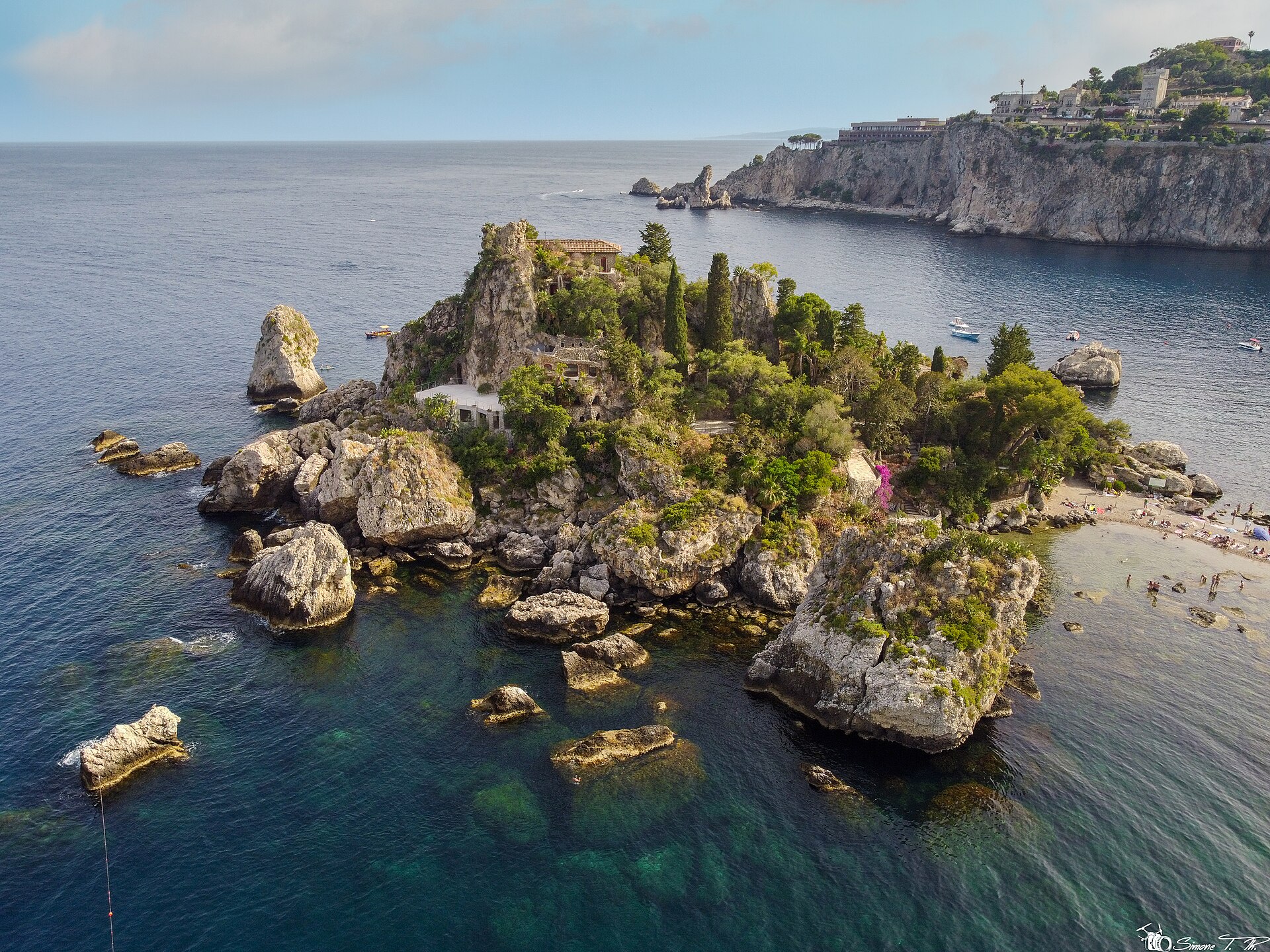
Isola Bella below Taormina is a small stone-and-gravel cove around a protected islet. Rocky edges and clear water may offer more to a snorkeller than a flat sand bottom, but space is limited and access involves steps from the road or the cable-car area. Tides and sea level affect the narrow connection to the islet. Arrive early, respect reserve barriers and do not expect an empty bay. You can combine it with our Taormina guide instead of spending the day moving a car between the two levels.
Letojanni north of Taormina and Fondachello or Marina di Cottone south of Riposto offer broader pebble and gravel shores with a more everyday character. The water often becomes deep quickly, which may suit a confident swimmer and be less suitable for small children. Swimming shoes help with hot stones and entry. On days with onshore wind, leaving the water on a pebble beach can be awkward, so judge the waves before getting in.
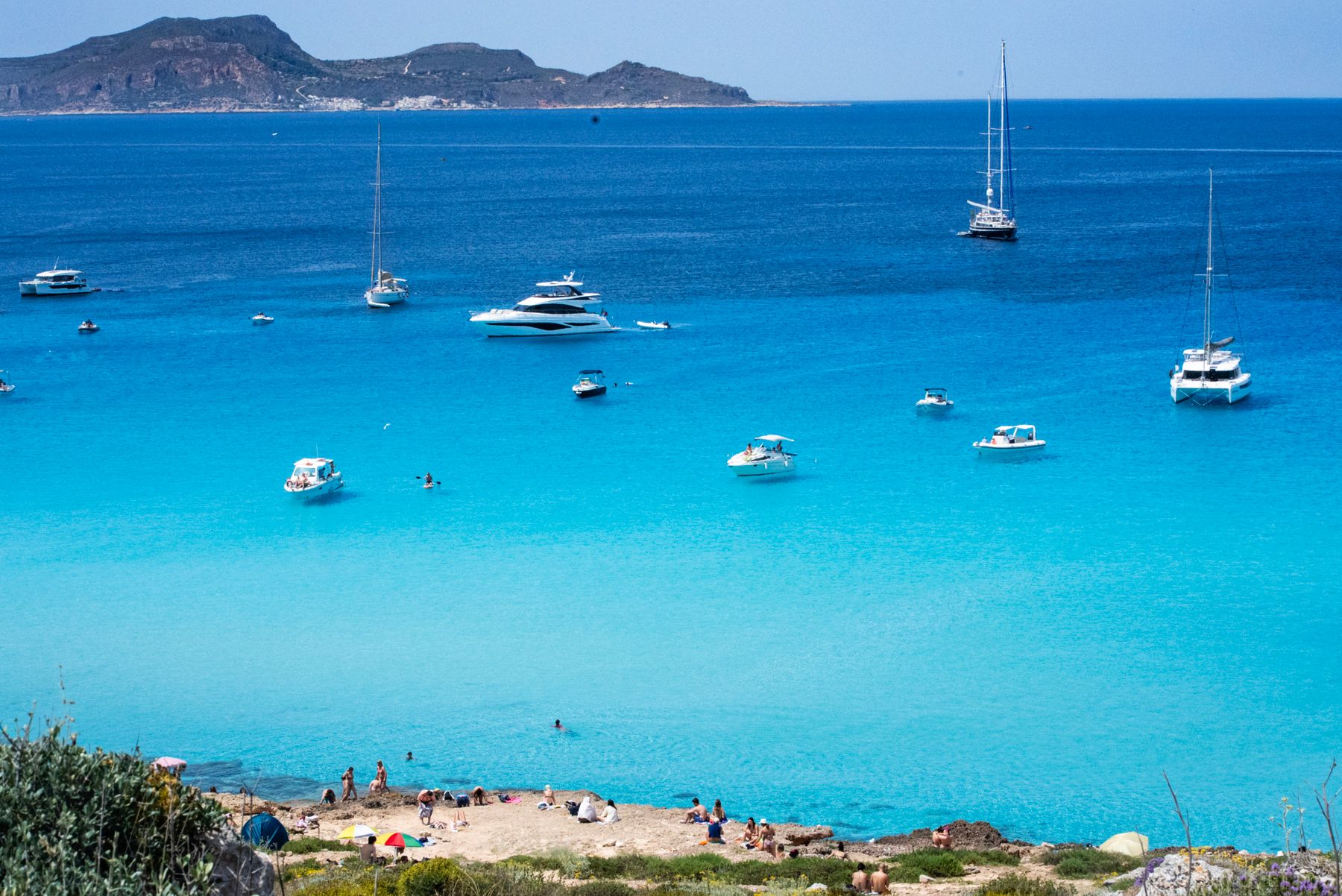
Aci Trezza is not a conventional sun-lounger beach. Its coast is volcanic, and the prominent Faraglioni rocks make it interesting for swimming and snorkelling in calm conditions. Boat traffic, slippery entry points and deep water require attention. Favignana's Cala Rossa and Cala Azzurra are often sold as simple paradise names, but the former is substantially a rock-and-tufa experience and access can be uneven. Choose them for geology and water, not with the expectation of soft sand.
Snorkel with a partner and stay well away from boat routes. An inflatable marker or tow float can improve visibility but does not replace local judgement. Do not touch sea urchins, plants or organisms fixed to rock, and do not stand on sensitive seabed. The clearest cove is still a living habitat, not an aquarium arranged for visitors.
For nature and walking: Vendicari and Zingaro ask more of you
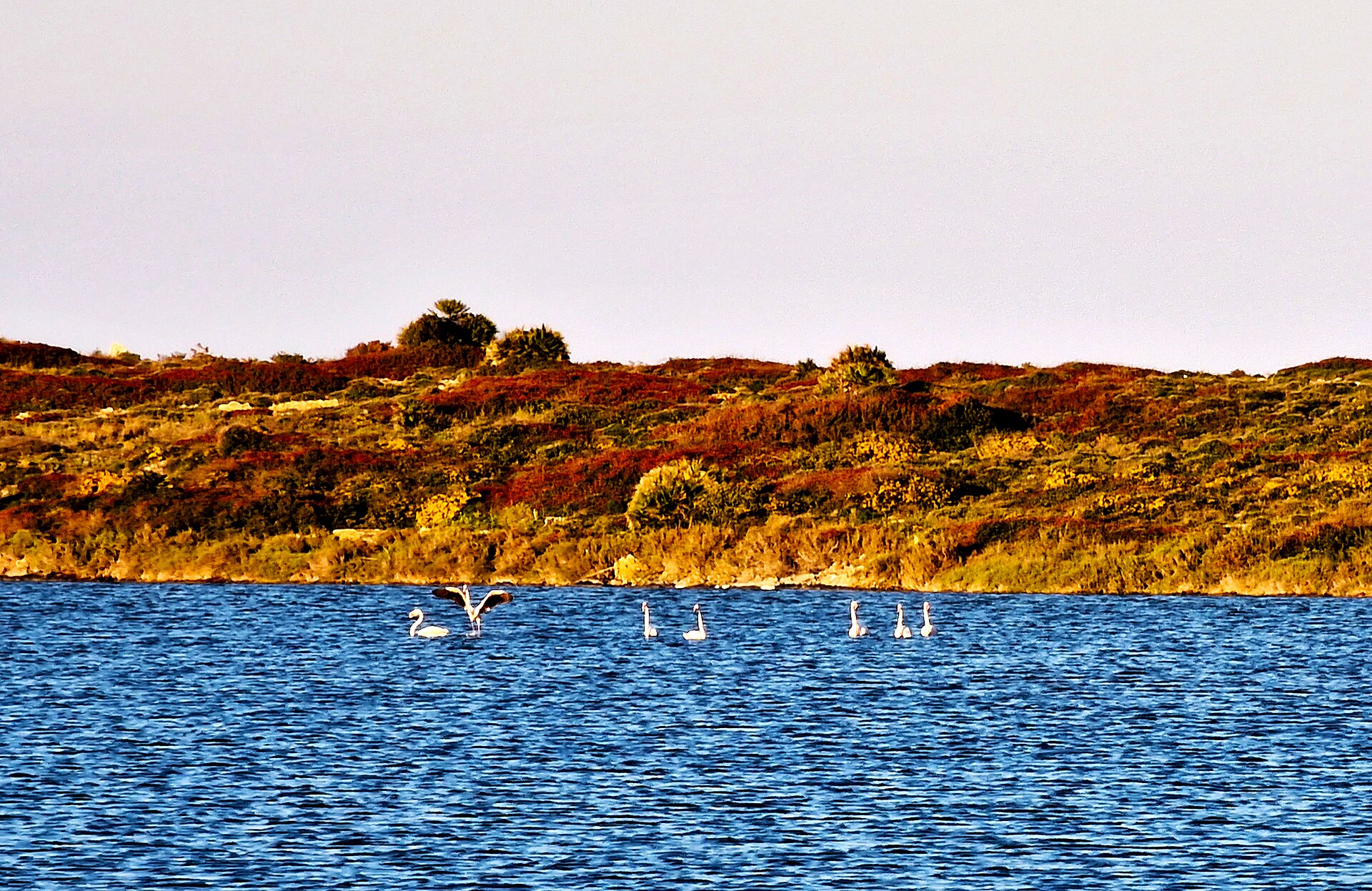
Vendicari Reserve between Noto and Pachino protects wetlands, dunes, rocky coast, sandy beaches, archaeological traces and buildings from tuna-fishing history. Eloro, Marianelli, Calamosche, the Tonnara area and Cittadella are reached from different entrances; they are not one continuous car park. Select one sector and give it time. Calamosche is a beautiful, smaller cove, but the walk in full sun and limited space do not automatically make it best in August. The Tonnara sector combines coast, bird habitats and cultural remains and often tells a fuller story.
The reserve lacks the services associated with a lido. The official Vendicari guide advises carrying water, food, a hat and suitable shoes, while the regional ORBS page describes its protected status. Carry waste out, remain on permitted paths and keep your distance from birds. Flamingos and other migrants follow season and ecology, not an itinerary.
Zingaro between Scopello and San Vito Lo Capo is a coastal reserve of paths, small coves and limestone scenery. A visit is a hike first and possibly a swim second. You must be able to carry water and equipment, walk in proper footwear and accept that the closest coves receive the most visitors. The reserve's official practical page states current access and payment requirements.
After the July 2025 fire, the reserve reopened partially on 14 March 2026, initially through the southern Scopello entrance and along a limited coastal section. That is a dated status, not a guarantee for your visit. Fire risk, ecological recovery and official work can change routes. Read the regional reopening announcement and verify the reserve's own information immediately before setting out. Never cross a closure to reach a famous cove.
For an island experience: Favignana, Lampedusa and the Aeolians are separate journeys
Favignana can be reached by ferry from Trapani and explored by bicycle or scooter, although distance, heat and traffic deserve realistic thought. Its celebrated bathing places range from rock pools to small sandy patches. The former tuna plant, Ex Stabilimento Florio, provides essential context: this was a production community long before it became a beach brand. A day trip can work, but the last ferry creates a fixed boundary and wind can affect sailing schedules.
Spiaggia dei Conigli on Lampedusa is a protected place, not merely a beach with an attractive name. In 2026 the regulated period runs from 8 June to 18 October, with sessions from 08:30–13:30 and 14:30–19:30; always verify dates and times again before visiting. Entry during that period requires a reservation through the official booking system, and the process is described on its How it works page. Lampedusa lies far south of Sicily's main island and requires its own flight or ferry planning. It is not a spontaneous detour from Taormina or Palermo.
The Aeolian Islands combine black volcanic sand, pebble shores, cliffs and boat access. Lipari has the widest transport links and services, Salina has green slopes and village life, while Stromboli is dominated by its active volcano. None should be chosen from a single beach photograph. Sea conditions can alter ferries and boat excursions, and access around active volcanoes follows official restrictions.
The southern coast: space, wind and greater distances
Torre Salsa west of Agrigento is known for a less developed shore of cliffs, sand and protected nature. Its relative quiet is partly a product of access; this is not a serviced destination. Road condition, reserve rules and daily entry need local confirmation. Farther east, beaches near Marina di Ragusa, Sampieri and Pozzallo have more town or resort infrastructure. They may be better for a full day when a group has varied needs.
Scala dei Turchi is frequently treated as an ordinary beach attraction, but the white marl cliff is a vulnerable geological site with regulated access and recurring protection issues. Do not plan from old photographs showing people walking freely over every surface. Check municipal and regional rules, view the landscape from lawful areas and choose a genuine beach for your swimming day.
The southern coast's open character means that wind can be welcome to someone seeking fresh air and waves but difficult with young children or snorkelling plans. When the forecast indicates strong wind from one direction, a bay on another coast may be calmer. Ask local lifeguards or hosts, but make your own judgement once you see the water.
When Sicily's beaches work best
July and August bring warm water, long days and full services, but also hot cars, pressured parking, crowded lidos and scorching paths. June and September often provide the strongest balance for swimming, though weather is never guaranteed. May and October can offer beautiful coastal days, yet the sea is cooler and seasonal services may be limited. Winter suits coastal walks, birds and urban beaches as landscapes, not an expectation of organised bathing.
See our guide to the best time to visit Sicily and Sicily weather month by month for the wider seasonal picture. On the actual day, wind, waves and local warnings matter more than monthly averages. Nature reserves add fire danger and heat exposure to the calculation.
Access, lidos and the free beach
Many Sicilian beaches have both fee-charging stabilimenti or lidos, where a parasol and bed are rented, and a spiaggia libera, the public free section. A lido can be sensible when you need shade, a toilet and a fixed place; it is neither inherently more nor less authentic. The free beach asks you to arrange shade, remove waste and often manage without a toilet. Prices and booking practice differ sharply by location and date, so ask directly and understand the terms before paying.
Parking at famous beaches may be regulated, private or full early. Leave no valuables visible, and never park on vegetation, emergency access or private entrances. If an improvised space requires blocking the road, the beach is full for you that day. Our Sicily car-rental guide explains restricted zones, insurance and practical compromises.
Accessibility cannot be inferred from a beach's proximity to a road. Steps, loose stones, soft sand and missing boardwalks may decide whether it works for a wheelchair user or someone with limited mobility. Contact the particular municipality or lido about ramps, toilets and assistance; obtain a current answer instead of relying on a general beach description.
Choose well in five minutes
Begin with travel time from your bed, not from an abstract Sicily itinerary. Then choose among easy sand, rocky water, nature hike and urban beach. Check the day's wind and sea, reserve access and whether the group needs shade, toilets or food. With young children, a short distance and the ability to leave early reduce risk. With walking shoes and experience, a nature beach can become the main event.
On the east coast, families can choose Giardini Naxos or a local lido, while strong swimmers may prefer pebble and rock shores. In the south-east, a serviced town beach can be paired with a separate nature day in Vendicari. In the north-west, San Vito offers simple sandy logistics, while Zingaro demands preparation and confirmed access. On the islands, ferries, weather and the return journey must govern the plan.
The best beach is ultimately where the day's natural conditions, your access and the place's ecological capacity meet. Choose on those terms and there is no need to chase an identical turquoise photograph across the island. Sicily's coast becomes more rewarding when its differences are allowed to be the point.
Official sources
Use Visit Sicily's official coastal overview for regional orientation. Then verify same-day conditions with Riserva dello Zingaro, Vendicari in the regional reserve system or the relevant local authority. For Spiaggia dei Conigli, only the official reservation system is a reliable source for entry requirements and availability.