Fact-checked 22 July 2026.
Giardini Naxos has two histories rarely told together
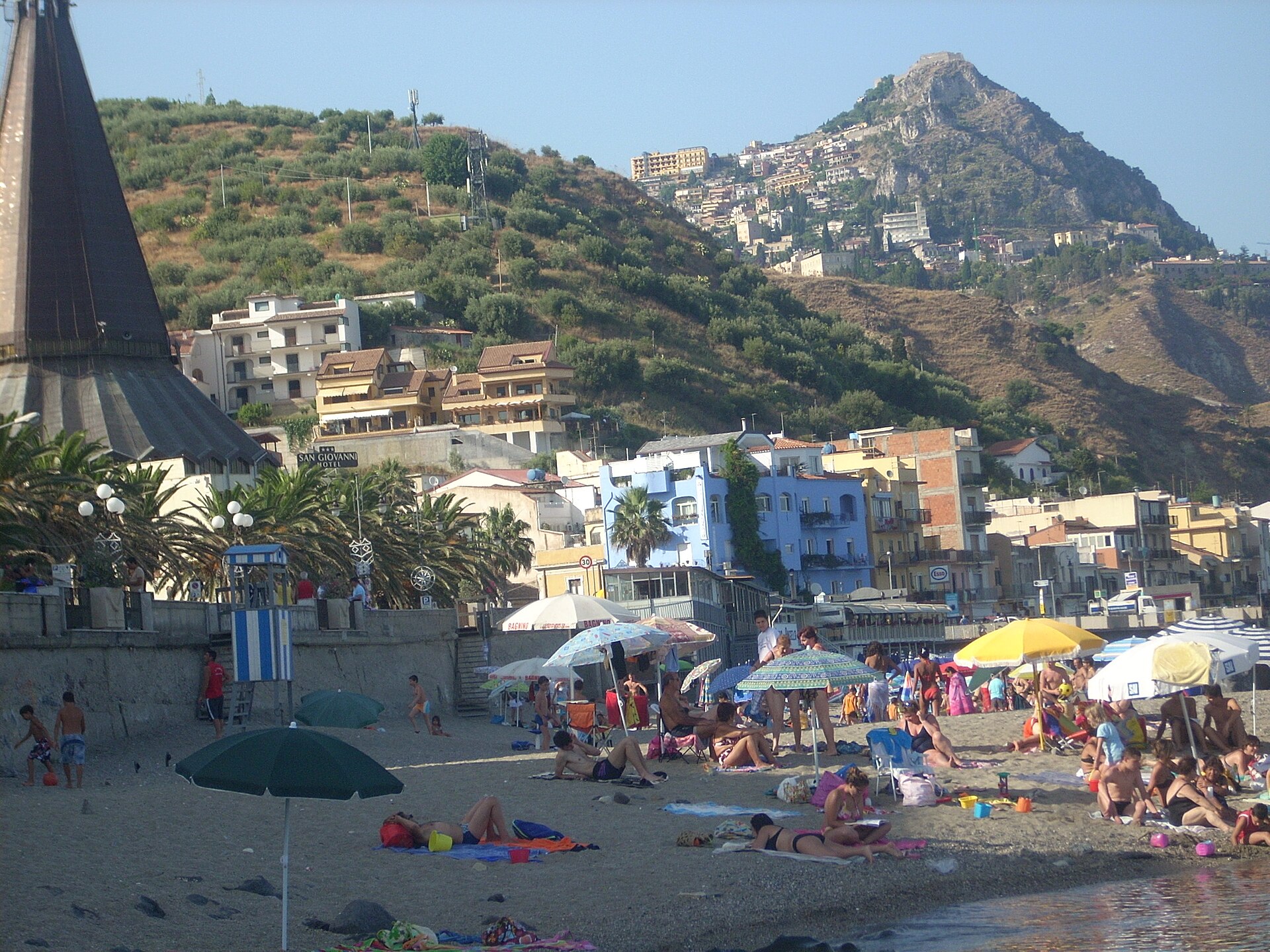
From Taormina, Giardini Naxos is often perceived as the flat resort below: hotels, beach service, excursion boats and a long summer waterfront. From the archaeological park it looks entirely different. Streets, houses, sacred areas and fortifications belong to Naxos, identified by the municipality and Sicilian Region as the first Greek colony in Sicily. The two stories—modern visitor economy and ancient colonisation—occupy one coast but are commonly experienced apart.
That double identity makes the town useful. Giardini Naxos is less monumental and less steep than Taormina. It can provide a straightforward beach day, archaeological visit, harbour evening or base for Etna and Alcantara. In return, summer traffic is dense, the shore changes character along the bay, and parts of town express seasonal construction more than historical intimacy. Choose it for sea access and as a practical coastal base, not because it imitates Taormina's scenery.
From Naxos to Giardini: colony, port and resort
Naxos was founded around 735–734 BCE by settlers predominantly associated with Chalcis in Euboea, probably accompanied by people linked to Naxos in the Aegean. Ancient authors and modern archaeology do not settle every detail, but the site is widely accepted as Sicily's first Greek colony. Capo Schisò offered a protected bay, agricultural territory and access towards the strait. Groups from Naxos helped found Leontinoi and Katane, modern Lentini and Catania.
Political life was unstable. Naxos was forcibly altered during conflicts among Greek tyrants, later returned to a regular urban plan and aligned with Athens. In 403 BCE Dionysius I of Syracuse destroyed the city in punishment for its position in the conflict. People were dispersed and some sold into slavery, and Naxos never recovered its independent polis status. The port retained importance while a new centre grew on Monte Tauro in the area that became Taormina.
The modern name records another economy. “Giardini” refers to gardens and cultivation along the coast. Fishing, citrus, ironwork and ceramics mattered to local households long before mass holidays. The regional tourism authority describes a quiet fishing and agricultural settlement until around the 1970s, after which hotels, apartments, restaurants and beach services expanded rapidly. That created employment and infrastructure, but also a town whose population, traffic and noise differ sharply between January and August.
Reading the bay: choose the right area
The northern stretch towards Taormina
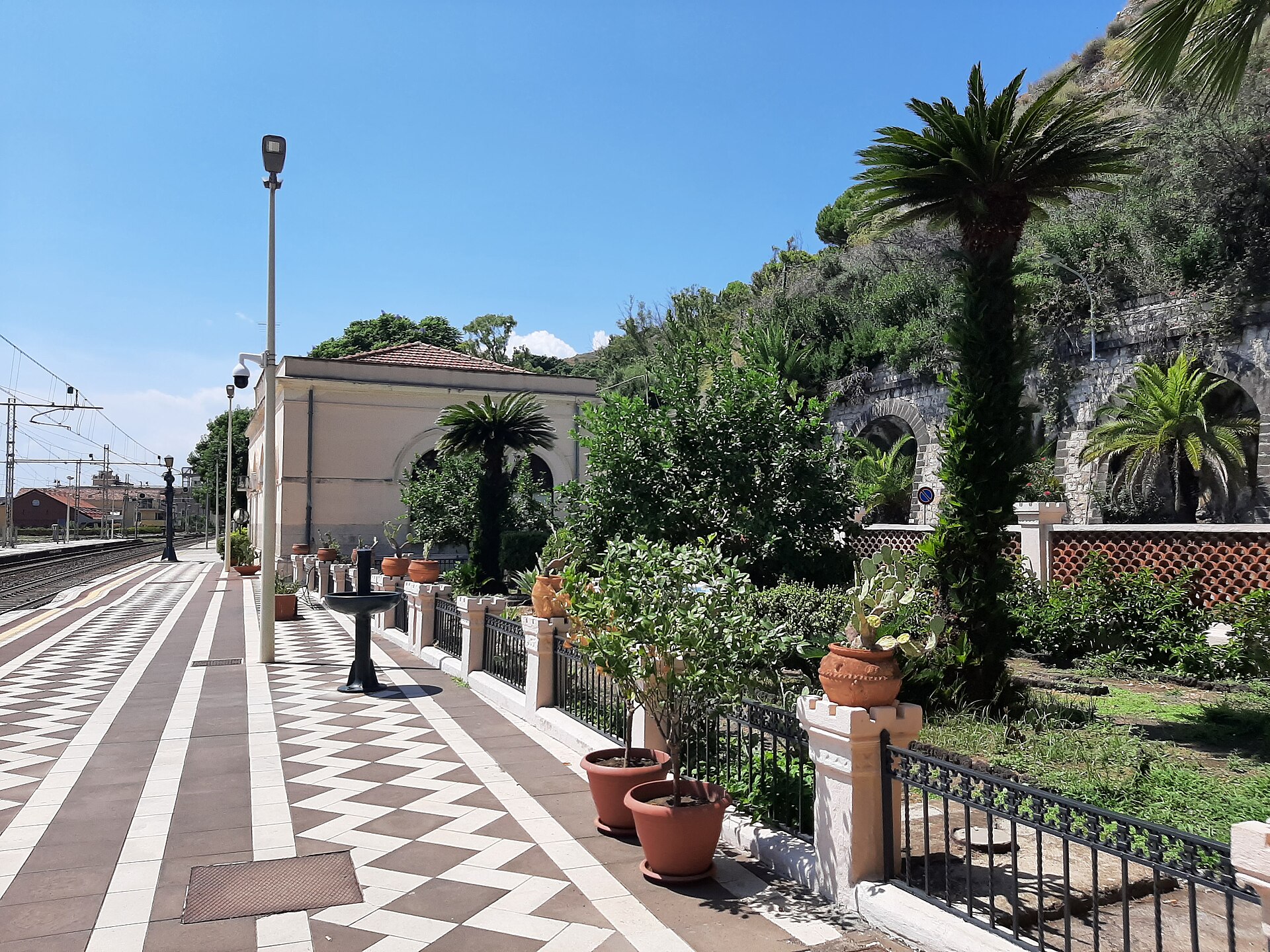
Northern Giardini lies near Taormina-Giardini railway station and the road climbing towards Taormina. Development is dense and beach sections vary in width and material. This area can be practical for rail arrivals combining sea and Taormina, but is less simple than a single broad sandy beach. Traffic on the main road is audible, and pavements are not consistently wide.
The central bay and waterfront
The centre has a conventional town beach with promenade, housing, bars and restaurants close to the water. Moving between a swim, coffee and evening walk is easy. Beach material can change from finer grains to pebbles, and the water may deepen more quickly than at a shallow family beach. Judge the exact section and that day's waves instead of trusting one general description of “sandy beach”.
Schisò, harbour and archaeology
Capo Schisò forms the southern side of the historical bay. Excursion and marina activity, the archaeological museum and entrance to the ancient city sit here. Waterfront and archaeology meet without drama: a few minutes take you from modern boat services to an ancient wall. It is the strongest location if Naxos history matters, though accommodation maps need careful reading because Schisò describes a wider zone.
Recanati to the south
Recanati contains larger holiday complexes, apartments and beach areas with both free access and serviced lidos. It can suit families prioritising beach and easier car access, but stands farther from the northern promenade and station. Evening activity is strongly seasonal, and outside summer some businesses reduce hours or close. A short map distance is not necessarily a pleasant walk in heat and traffic.
The archaeological park and museum: making low ruins meaningful
Parco Archeologico di Naxos extends south of the modern town across about 40 hectares of Capo Schisò, between the Santa Venera stream and the bay that formed the colony's port. A path crosses low walls, street axes and vegetation. Its ruins do not rise dramatically like Taormina's theatre. They offer something different: the ability to read a city plan and understand the arrangement of houses, sacred space, production and defence.
Begin in the museum when open. Most collections derive from more than half a century of excavation. They include prehistoric material, early Greek pottery, architectural terracottas, coins and discoveries from cemeteries and underwater research. An important thread is contact between settlers and indigenous communities. The display should not be read as a tale of an empty land suddenly receiving civilisation from outside.
The route from the museum follows part of the ancient plateia B. Other visible structures include walls, housing and a sanctuary linked with Hera or Aphrodite. The regional park also describes thirteen early houses beneath a later principal road and fortification dating from around the mid-sixth century BCE. These details make the low masonry legible. Allow at least ninety minutes to two hours for museum and site, longer if reading signs carefully.
The park publishes hours and tickets on separate pages. Verify current hours and tickets directly before visiting, as seasonal schedules, prices and access can change. Temporary closures occur during maintenance and special events.
The naval arsenal and maritime Naxos
A ship-shed complex has been identified near the old harbour north of the central ancient town. Access has sometimes required reservation, so it is not a spontaneous stop to assume. Its historical point is important: the colony faced seaward networks rather than existing solely as an agricultural settlement. The stone and lead anchors in the museum reinforce that maritime connection.
Castello Schisò and the Nike
Castello Schisò represents a later layer on the cape. The structure changed through medieval and modern periods, and access should not be assumed simply because it is visible from the road. Near the harbour stands the Nike di Kalkis, a 1965 bronze by Carmelo Mendola created to symbolise connection with Chalcis. It is a modern work and an example of the post-war town making ancient identity visible within a resort.
The beach day: free shore, lido and sea conditions
Giardini Naxos offers publicly accessible beach sections and private lidos charging for equipment and services. Prices vary sharply by month, position and row; ask for the total before settling. A lido has value when shade, toilet, changing space and a guaranteed place matter. A free beach provides flexibility but requires your own shade, and desirable sections fill early in July and August.
Water and waves require same-day judgement. The bay has shelter compared with fully exposed coast, but wind, boats and weather systems still shape conditions. Children need close supervision even when entry looks calm. Water shoes help on pebbly sections. Do not swim near harbour approaches or boat lanes, and observe buoys and local instructions.
The strongest summer rhythm is early beach, lunch and shade through midday, then another swim in late afternoon. June and September are often easier, while October may combine warm water with less predictable weather. Winter is suitable for promenades and archaeology, not guaranteed bathing. Compare the coast in our beaches near Catania and Taormina guide and consult Sicily weather month by month.
Food and evenings: a seasonal coastal economy
Fish and shellfish are obvious choices, but sea view does not guarantee local catch or a good kitchen. Ask about the day's fish and prefer a menu of credible scale. Pasta with swordfish and aubergine, mussels, grilled fish and simple antipasti fit the coast, but sourcing and cooking matter more than the name. Pizzerias, bars, gelaterias and international options reflect the range of holiday markets.
In peak season people dine late and the promenade remains active well into the evening. Families can use an early aperitivo or substantial snack to bridge the gap to dinner service. A room directly above a lively section brings convenience and also music, scooters and cleaning. Read recent reviews for noise and windows, not only breakfast. Outside summer, choice contracts while year-round businesses show a different town.
Transport: train, bus, car and Taormina
| Arrival | Strength | Constraint |
|---|---|---|
| Train to Taormina-Giardini | Useful east-coast connection | Station is north of much of the resort |
| Regional bus | Links Catania, airport, Taormina and Recanati | Peak traffic affects timing |
| Car | Flexible for Alcantara and Etna | Summer parking pressure |
| Walking | Works within your selected district | The whole coast is long in heat |
The station is named Taormina-Giardini but lies on the coast north of central and southern Giardini Naxos. Accommodation in Recanati may require a bus or taxi after the train. Check Trenitalia's live timetable and build a generous margin before flights. Regional coaches link the area with Catania Airport and other destinations; the airport lists operators and routes on its official bus page.
Drivers arrive via the A18 and SS114, but summer weekends produce queues near exits, beach roads and Taormina connections. Book accommodation with documented parking if using a car; “parking nearby” is not a reserved space. Casa Parisi in Giarre makes Giardini Naxos a simple outing without changing hotels. Read our car-rental guide as well.
Taormina is physically close but high above the coast. Bus or taxi is generally more realistic than walking the whole climb, especially in heat. The cable car links central Taormina with Mazzarò, not Giardini Naxos, a common misunderstanding. Visit Taormina early and Naxos later, or give each its own day in August. Our Taormina guide helps set priorities.
Three realistic day plans
Archaeology and beach
Arrive at the museum around opening, spend two hours in the collection and park, eat a simple lunch at Schisò and choose a beach within walking distance. End around the harbour and promenade. This works without a car when arrival and accommodation are sensibly placed.
Taormina and Naxos in one day
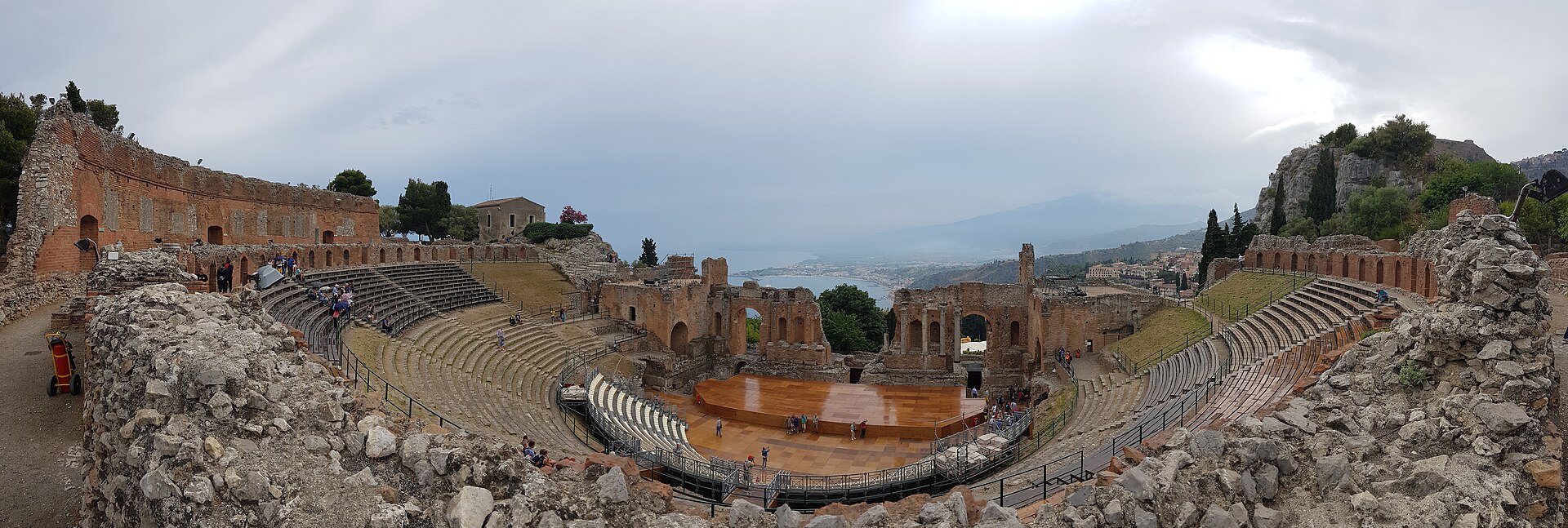
Reach Taormina's ancient theatre at opening, walk the central axis before noon, then take a bus or drive down. Use late afternoon for Naxos beach and dine by the bay. Do not add Alcantara and Etna. Doing so makes the day hostage to traffic and leaves no time inside the places.
Alcantara Valley from the coast
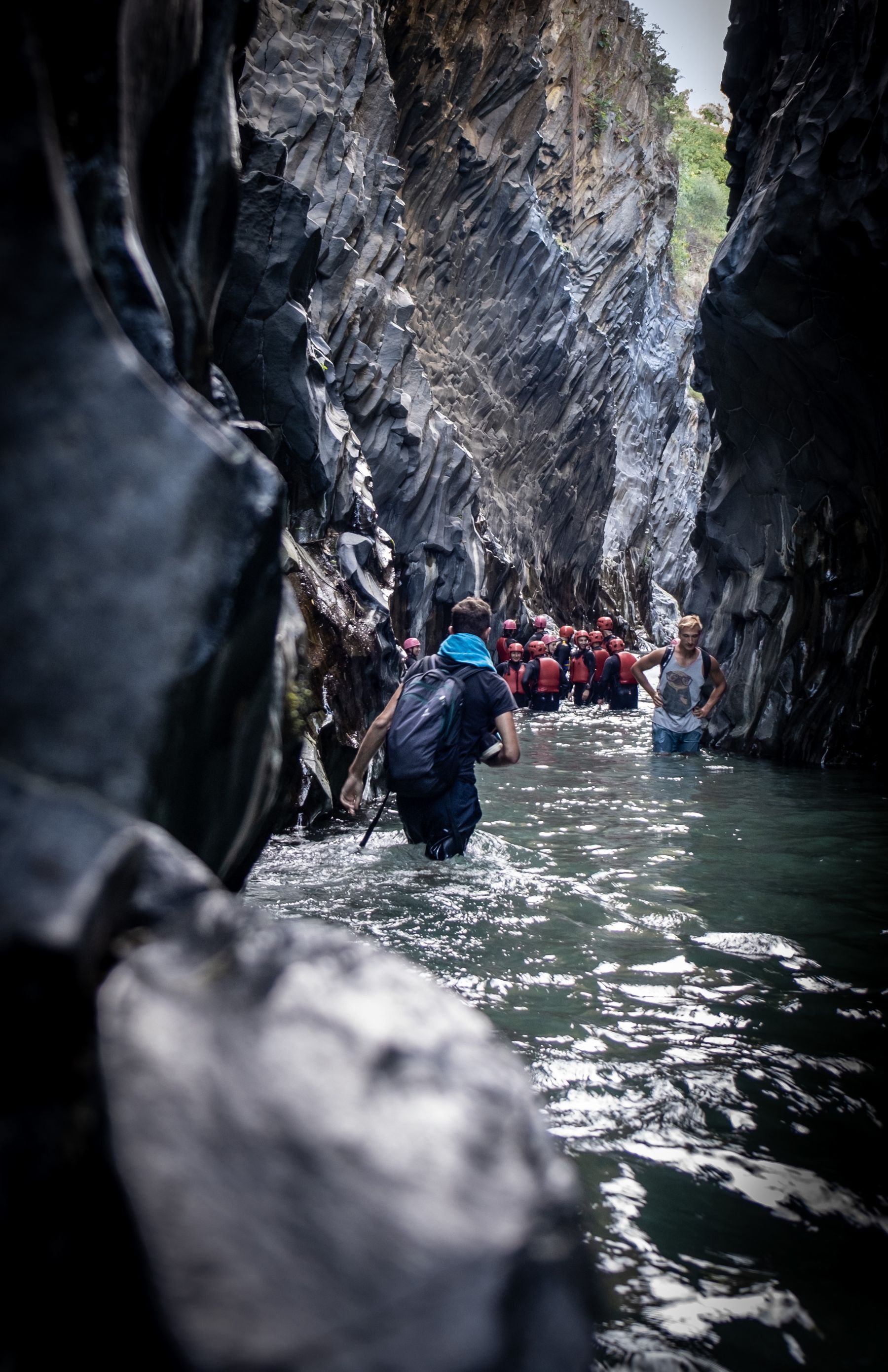
Leave early for the gorge before its busiest entrance fills. Continue to Motta Camastra, Francavilla or Castiglione di Sicilia rather than immediately turning back. Return for a late swim. Read our Alcantara Gorge guide for water, access and safety.
The less visible reality behind the beach
Tourism made Giardini Naxos economically important and created a large supply of beds, restaurants and excursions. It also produced seasonal employment, traffic, coastal pressure and a pronounced summer-winter divide. Ancient Naxos remains a research and conservation landscape competing for attention with the beach. Visitors can support a more connected town by paying to enter the archaeology, using year-round local businesses and respecting free beach space.
It is tempting to call the pre-1970s fishing settlement more “authentic” than today's resort. That ignores the households that built livelihoods in tourism. The useful question is how coast, heritage and residence can share limited space. For a guest that becomes concrete: less waste, no pavement parking, respect for night-time residents and time for both museum and sea.
Official sources
History was checked with the Comune di Giardini Naxos and Regione Siciliana. Archaeology, collections, hours and ticket status were checked with the Naxos and Taormina Archaeological Park. Modern visitor and town context was compared with Visit Sicily. Recheck official pages close to the visit.
Conclusion: choose Giardini Naxos for the connection between sea and history
Giardini Naxos works when it is not required to be a cheaper Taormina. It has its own geography and a colonial history older than the hill town above. A good day allows the two realities to meet: pottery and street plans in the morning, water in the afternoon and a lived-in promenade at night. Select the bay district that matches transport and beach preference, then plan fewer excursions than the sales catalogues offer. Naxos becomes a base with substance rather than merely a bed beside the coast.
Staying in the right part of town avoids unnecessary journeys back and forth along the coast road. You will have more time for the archaeological site, a swim and an unhurried meal by the bay.